Blog
11
Jul
Best Time To Visit Sylhet
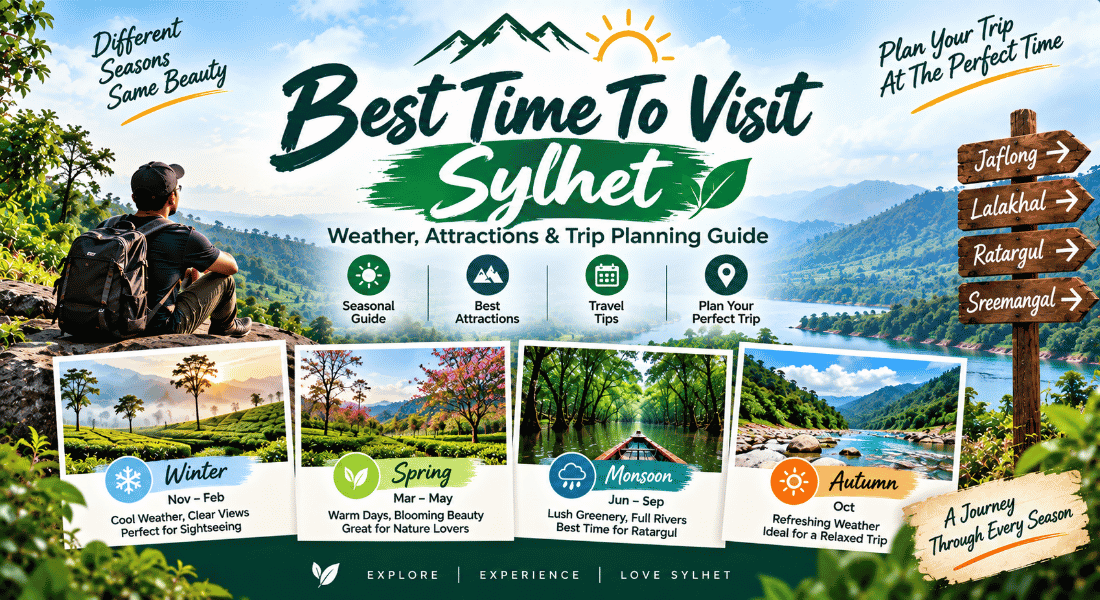
Best Time to Visit Sylhet: Weather, Attractions & Trip Planning Guide
Sylhet's landscapes change dramatically with the seasons. The tea gardens look completely different in March than they do in August. The rivers swell during the monsoon. The hills turn brown in the dry months. So when should you actually go?
The short answer: October to March offers the most comfortable weather for sightseeing. But the "best" time really depends on what you want to experience. This guide breaks down Sylhet's seasons month by month, so you can plan a trip that matches your preferences.
Sylhet's Climate at a Glance
Sylhet has a tropical monsoon climate. It's one of the wettest regions in Bangladesh, receiving heavy rainfall between June and September. The temperature stays relatively warm throughout the year, but humidity levels vary significantly.
Here's what to expect across the seasons:
The winter months are the most popular time for visitors. The weather is comfortable for exploring outdoor attractions, and the skies are generally clear. If you want to see Ratargul Swamp Forest at its most dramatic, the monsoon season offers a completely different experience.
Month-by-Month Breakdown
November to February – Winter
This is the peak tourist season in Sylhet. Temperatures drop to around 10–15°C at night and stay between 20–25°C during the day. The humidity is low, and rainfall is minimal.
What to expect:
Clear skies and comfortable temperatures
Ideal conditions for boat rides and outdoor exploration
Tea gardens looking their lush best
Early morning fog that adds a magical quality to the landscapes
What to pack:
Light sweaters or jackets for mornings and evenings
Comfortable walking shoes
Sunscreen – the sun can still be strong during the day
Highlights of visiting during this season:
Jaflong and Bichanakandi are at their most accessible
The Lalakhal boat rides are comfortable and scenic
Sreemangal's tea gardens are perfect for long walks
Ratargul Swamp Forest is partially submerged, but boat rides are still enjoyable
Winter is the most popular time for a reason. The weather is almost perfect for a Sylhet trip. However, this is also when accommodation prices tend to be higher. If you're travelling on a budget, you might want to consider the shoulder seasons.
March to May – Pre-Monsoon
The temperatures start rising in March. By May, daytime temperatures often exceed 30°C, and humidity increases noticeably. The rainfall begins to pick up, particularly in May.
What to expect:
Warming temperatures, especially in April and May
Increasing humidity
Occasional afternoon thunderstorms
Greenery starting to flourish with early rainfall
What to pack:
Light, breathable cotton clothing
A hat and sunscreen
An umbrella or light rain jacket
Highlights of visiting during this season:
Fewer tourists than winter months
Lower accommodation prices
The landscape begins turning lush green
Perfect for early morning exploration before the heat builds up
March is still quite pleasant, especially early in the month. By April and May, you'll want to plan your activities around the cooler morning and evening hours.
June to September – Monsoon
Sylhet gets heavy rainfall during the monsoon. The region receives some of the highest rainfall in the country, with downpours that can last for days. Rivers overflow, roads can become difficult to navigate, and boat journeys become more adventurous.
What to expect:
Heavy, persistent rainfall
High humidity levels
Potential for road disruptions
Flooded tea gardens and overflowing rivers
Spectacular views of Ratargul Swamp Forest
What to pack:
Waterproof clothing and footwear
A sturdy umbrella
Waterproof bags for electronics
Mosquito repellent (standing water increases mosquito activity)
Highlights of visiting during this season:
Ratargul Swamp Forest – this is the best time to see the swamp forest in all its glory. The submerged trees create a hauntingly beautiful landscape that's unlike anything else in Bangladesh.
Smaller crowds – most tourists avoid the monsoon, so popular spots are quieter.
Discounted accommodation rates.
The waterways are at their most dramatic, with gushing rivers and waterfalls.
Monsoon travel requires flexibility. Roads can get flooded, and some attractions might be temporarily inaccessible. Always check the weather forecast before your trip.
October – Post-Monsoon
October marks the transition from the monsoon to the winter season. The rainfall decreases sharply, and the weather starts becoming more pleasant. This is often called the "shoulder season" – a great time to visit if you want good weather without the peak season crowds.
What to expect:
Decreasing rainfall
Warm days and comfortable nights
The landscape is lush and green from the monsoon rains
Clear skies by late October
What to pack:
Light clothing for daytime
A light jacket for evenings
Sun protection
Highlights of visiting during this season:
The tea gardens are at their most vibrant green
The weather is transitioning to comfortable temperatures
The crowds haven't arrived in full force yet
The river views are stunning after the monsoon
Best Time for Specific Activities
Best Time for Tea Garden Visits
The tea gardens around Sreemangal look beautiful year-round, but they're at their best from November to March. The cool weather makes walking through the plantations more enjoyable, and the winter mist adds a dreamy quality to the landscape. During the monsoon, the gardens become incredibly lush, but the rain can limit your walking opportunities.
Best Time for Ratargul Swamp Forest
Ratargul is best visited during the monsoon months, particularly between July and September. The forest is fully submerged during this time, creating the iconic flooded forest experience that brings most visitors to Ratargul in the first place. If you visit during the dry season, the water levels are lower and the experience is less dramatic.
Best Time for Jaflong and Bichanakandi
These river destinations are accessible year-round, but conditions vary significantly. Winter (November–February) offers the most comfortable boat rides, with clear skies and calm water. The monsoon can make the rivers dangerous – always check conditions before heading out. For more details on travel times, check our guide on the Sylhet to Bichanakandi distance and Jaflong to Sada Pathor distance.
Best Time for Boat Rides at Lalakhal
The unique blue-green water of Lalakhal is most vivid during the winter months. Clear skies and calm water make for excellent boat rides. The monsoon brings higher water levels but also darker, murkier water. For current rates, our Lalakhal boat fare guide covers the costs in detail.
Best Time for Photography
For misty tea garden shots: November–February (early morning)
For dramatic flooded forest photos: July–September
For clear river shots: November–March
For overall vibrancy: October–November
Weather and Festivals
Sylhet's cultural calendar also influences the travel experience. Consider these if you want to align your trip with local events:
February: Ekushey February (Language Movement Day) – museums and cultural sites have special activities.
April: Bengali New Year (Pohela Boishakh) – local celebrations with food and music.
July–August: Khasia festivals in the Sreemangal region – if you're interested in indigenous culture, this is a good time to visit.
December: Winter harvest season – the tea gardens are active, and you might see local celebrations.
Planning Your Visit
How Many Days to Spend
If you're visiting between October and March, you can comfortably explore both the Sylhet city area and Sreemangal in 4–5 days. The weather allows for long days of sightseeing. For detailed day-by-day planning, our Sylhet tour itinerary guide covers options for 2-day, 3-day, and 5-day trips.
If you're visiting during the monsoon, plan for a more relaxed itinerary. Allow extra time for travel disruptions and consider focusing on indoor or water-based activities.
What to Book in Advance
During peak season (November–February), book your accommodation and transport well in advance. Hotels in Sylhet city and Sreemangal fill up quickly, and the best car rental options get taken early.
During the monsoon, you'll have more flexibility, but it's still wise to confirm your transport arrangements before arriving.
Transportation Considerations
Winter: All roads are accessible. Travel times are predictable.
Monsoon: Some rural roads become difficult to navigate. Roads in hilly areas like Gowainghat (Bichanakandi) can become dangerous. Always check road conditions before travelling.
Car rental: During the monsoon, you'll want a vehicle with good clearance. Our car rental in Sylhet guide covers what to look for.
Month-by-Month Summary
Otithi Sylhet Experiences
For travelers who want a well-organised trip without the planning stress, Otithi by BRAC offers curated Sylhet experiences.
Our Sylhet tour packages connect you with the region's best attractions, accommodation, and local guides – no matter which season you choose to visit. The packages include transport, carefully selected accommodation, and visits to key attractions. Whether you want to explore the top tourist places in Sylhet during winter or experience Ratargul during the monsoon, there's an option that fits your preferences.
Conclusion
The best time to visit Sylhet really depends on what you want to see and do.
For comfortable sightseeing and outdoor activities, November to February is your best bet. The weather is pleasant, the skies are clear, and you can explore the tea gardens, rivers, and hills without breaking a sweat.
For a truly unique experience, consider visiting during the monsoon. Ratargul Swamp Forest is at its most impressive, and the landscapes are lush and dramatic. Just be prepared for heavy rain and potential travel disruptions.
October offers a nice middle ground – the monsoon has ended, the landscape is still green, and the peak season crowds haven't arrived yet.
Whenever you choose to visit, Sylhet's beauty will leave you with lasting memories.
FAQ Questions
1. What is the best month to visit Sylhet?
December and January offer the most comfortable weather, with cool days and clear skies – ideal for sightseeing.
2. Is it worth visiting Sylhet during the monsoon?
Yes, if you want to see Ratargul Swamp Forest at its dramatic best. Just be prepared for heavy rain and potential road disruptions.
3. When is the peak tourist season in Sylhet?
November to February is the peak season, with the highest number of visitors and the most comfortable weather.
4. Is Lalakhal boat ride good during the monsoon?
Boat rides are possible during the monsoon, but the water becomes murkier and conditions can be rough. Winter offers the most pleasant boat ride experience.
5. What is the temperature like in Sylhet during winter?
Daytime temperatures range from 20–25°C, with nighttime temperatures dropping to 10–15°C, especially in December and January.
6. How many days do I need for a Sylhet trip?
4–5 days are ideal to explore both the Jaflong/Bichanakandi area and Sreemangal's tea gardens comfortably.