Blog
06
Aug
Celebrating Pahela Baishakh with Local Communities
Celebrating Pahela Baishakh with Local Communities: Authentic Village Festivals and Cultural Experiences in Bangladesh
Meta Description: Experience Pahela Baishakh with local communities through homestays and village festivals. Discover authentic cultural experiences and support sustainable tourism in Bangladesh.
Introduction
You want to celebrate Pahela Baishakh.
But not as a tourist watching from the sidelines.
You want to be part of it. You want to eat what locals eat, sing what they sing, and understand why they care.
That is what community-based tourism offers you.
Instead of joining crowds in cities, you stay with families in villages. You learn directly from people who have celebrated this festival for their entire lives. You see how they prepare food. You hear their stories. You participate in their celebrations.
Pahela Baishakh is more than fireworks and processions. For rural communities across Bangladesh, it marks the start of a new agricultural cycle. It is when families gather. It is when traditions pass from one generation to the next.
When you travel to these villages, you become part of this process. You bring money to families. You give young people reasons to learn old traditions. You show that their culture matters.
This is what community-based tourism does.
What Is Community-Based Tourism?
Understanding Community-Based Tourism in Bangladesh
Community-based tourism puts local people in control.
It works like this:
A family in a village decides to welcome visitors. They host you in their home. They cook meals for you. They take you to celebrations. They teach you skills. You pay them directly.
The money stays in the village. It does not go to a tour company in the city.
The family decides how many visitors they host. They decide what experiences they offer. They maintain control of their own lives and traditions.
This is different from typical tourism. In typical tourism, you book a hotel chain. You hire a guide from outside. The money flows to corporations.
Community-based tourism means you work directly with locals. You support real families. You help preserve actual traditions.
How Local Communities Benefit
When you choose community-based tourism, here is what changes:
Families earn income. They do not need to migrate to cities for work. Young people see that heritage has economic value. Teachers earn money by teaching crafts. Musicians earn money by performing. Farmers earn money by showing how they work.
Villages invest this income back. They fix schools. They improve roads. They buy better equipment.
Cultural traditions survive. When young people see tourists pay money to learn traditional music, they choose to learn it. When visitors book experiences making traditional crafts, families expand these businesses.
Women especially benefit. In many villages, women control homestays and food preparation. This gives them income and independence.
The village itself changes. Houses improve. New businesses open. Technology comes in. But the core remains. People still speak Bengali. They still celebrate Pahela Baishakh. They still prepare traditional foods.
Why Travelers Seek Authentic Experiences
You are not alone in what you want.
Travelers now avoid package tours. They skip the standard hotel experiences. They search for something real.
Here is why:
You want to understand a place, not just see it. Looking at a festival from a bus window teaches you nothing. Staying with a family during the festival teaches you everything.
You want your money to matter. You want to know that your travel helps real people. Community-based tourism does this. You can see the impact directly.
You want to remember your trip for life. Generic hotel stays fade. Celebrations with families stay with you forever.
Surveys show that travelers spend more money on authentic experiences than on typical tours. They return to visit the same families. They recommend these experiences to friends. They feel like they belong somewhere.
Celebrating Pahela Baishakh with Local Communities
Traditional Village New Year Celebrations
Villages celebrate Pahela Baishakh differently than cities do.
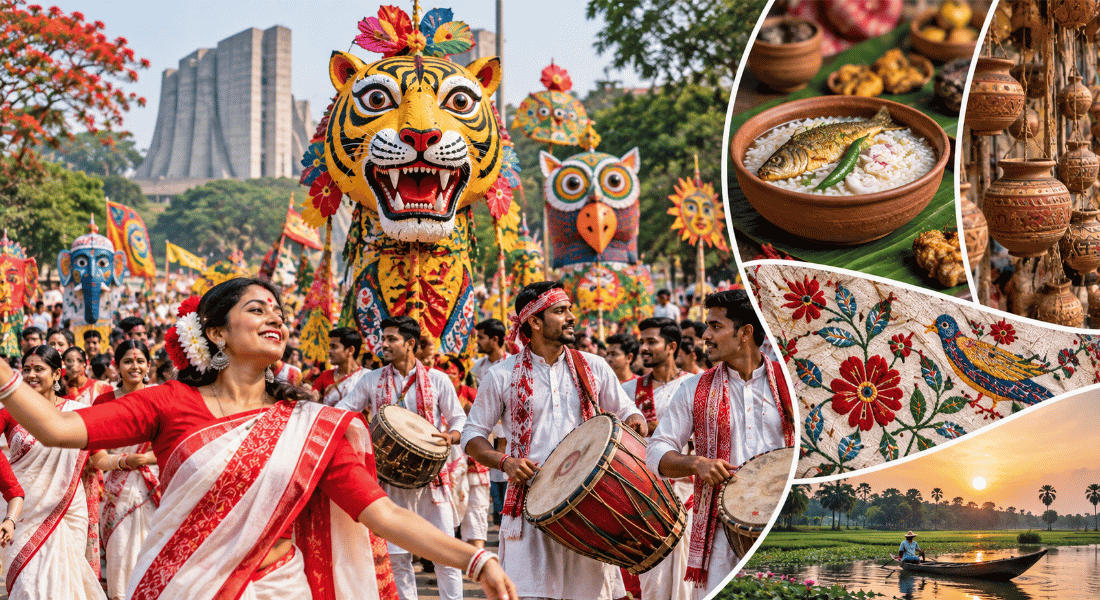
In cities, you see Mangal Shobhajatra. Thousands gather for the procession. It is spectacular. It is also crowded.
In villages, celebrations are quieter but deeper.
Here is what happens:
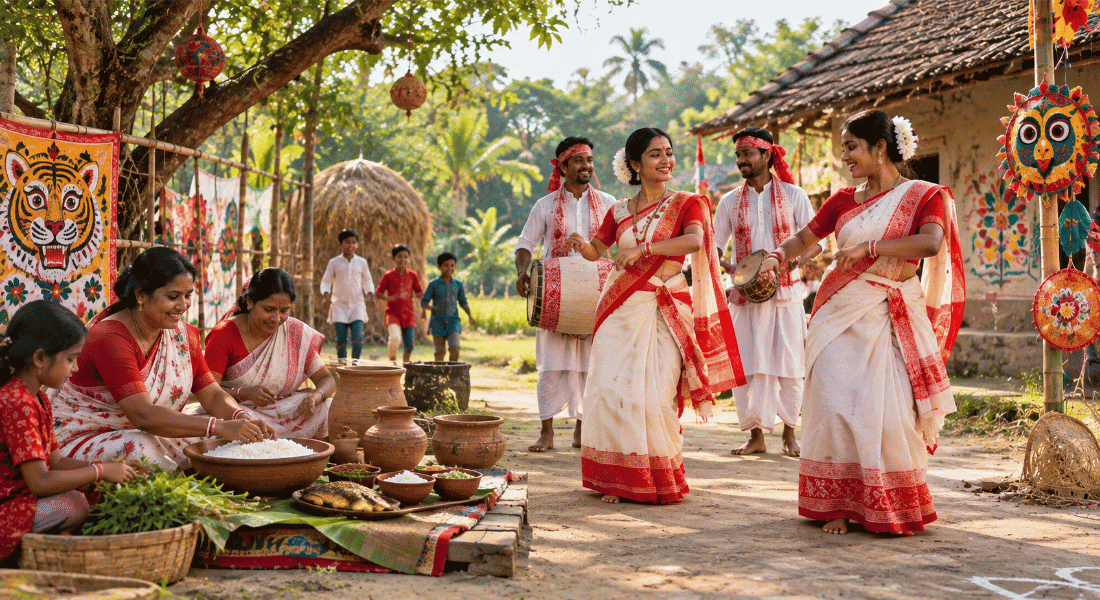
Families wake early. They wear traditional clothes. Men wear white dhotis and panjabis. Women wear colorful sarees with traditional patterns. Children help with preparations.
Families visit neighbors. They exchange greetings. They offer sweets they made at home.
The village gathers at a central place. Not everyone comes. Life continues. Someone must tend animals. Someone must watch children. But most people join in.
They sing together. Folk songs fill the air. Not the polished versions you hear on recordings. Real voices. Some off-key. Some beautiful. All genuine.
They eat together. Every family brings something. Rice dishes. Fish curries. Sweets. Vegetables. You eat from shared plates. You sit with people you just met. You become part of the meal.
In some villages, they perform plays. These plays tell old stories. They also tell current stories. A play might be about a farmer struggling with drought. It might be about young people leaving for the city.
The celebration lasts all day. By evening, people are tired. They are happy. They have celebrated together.
Community Gatherings and Cultural Activities
When you join a village celebration, you participate in activities that matter to locals.
Village fairs happen on Pahela Baishakh:
People sell items they made. A woman sells pottery she created. A man sells wooden toys. Another sells vegetables from the field. These are not souvenirs for tourists. These are things families need or want.
Games happen everywhere. Children play traditional games. They use items from nature. Sticks become bats. Stones become markers. Adults gather to watch and cheer.
Elders sit together. They tell stories. They discuss village news. They greet visiting relatives. You can listen. You can ask questions. They will answer.
Music happens constantly. A man plays a wooden flute. A woman beats a drum. Children sing. It is not organized. It is not scheduled. It simply happens when people gather.
You can participate or watch. Either way, you are part of the moment.
Experiencing Bengali Hospitality
Bengali hospitality is real. It is not performed for tourists. It is a core value.
When a family invites you to celebrate Pahela Baishakh, they treat you as family.
This means:
They offer you food constantly. More than you can eat. They ask if you are comfortable. They ask if you want more tea. They do this repeatedly. It is not a question. It is an expression of care.
They include you in decisions. Should we go to the fair now or later? What do you want to eat? Do you want to visit that neighbor? Your opinion matters to them.
They protect your comfort. If it rains, they find you shelter. If you are tired, they suggest rest. If you want to walk somewhere, someone goes with you.
They share stories. They tell you about their lives. They ask about your life. They listen carefully to your answers.
They give you things. At the end of your stay, they give you gifts. A scarf. A plant. Food they prepared. Photographs. They do this because you brought joy to their home.
Village Festivals in Bangladesh During Pahela Baishakh
Rural Fairs and Local Markets
Baishakhi melas are village fairs that happen during Pahela Baishakh.
These are nothing like city festivals.
The fair is usually in an open field. A few hundred people come. Vendors set up simple stalls. No electricity. No permits from the city. Just people bringing their goods.
What you see at the fair:
Pottery stalls with items made from local clay. Baskets woven from bamboo. Clothes sewn by hand. Flowers bundled fresh. Food cooked on small fires. Toys carved from wood.
You can buy these items. They are inexpensive. A clay pot costs about two dollars. A woven basket costs five dollars. A wooden toy costs one dollar.
But the real value is watching. You see how things are made. A potter explains her process. A basket maker shows you the bamboo. Someone cooking offers you a taste.
This exchange is the fair. It is not a transaction. It is sharing.
The fair also has entertainment. A folk singer performs. Children watch a simple play. There might be a local wrestler or a storyteller. People gather around. They clap. They laugh. They cry. They go home talking about what they saw.
Folk Music and Traditional Performances
Bengali folk music defines Pahela Baishakh in villages.
The most important form is Baul music.
Baul singers are wandering musicians. They play a stringed instrument called an ektara. They sing about love, nature, and spirituality. Their voices are raw and powerful.
Baul singers often visit villages during Pahela Baishakh. A singer arrives with nothing but his instrument. The village hosts him. He performs. He eats. He sleeps. He leaves the next day.
You can listen to Baul singers in villages. Their music sounds different than recordings. It echoes across open fields. It moves through your body.
Other folk performances happen too:
Jatra is Bengali folk theater. Performers wear makeup and costumes. They act out stories that teach lessons. The performance lasts hours. The audience sits on the ground. Children fall asleep. Adults stay awake, captivated.
Nakshi folk songs are performed by groups. They sing about daily life. Songs about farming. Songs about love. Songs about loss. Multiple people sing together. Their voices blend.
Traditional dances happen. Women perform dances that their mothers taught them. Men perform dances that tell stories of hunting or farming. Children join in when they feel ready.
These are not polished performances. They are rough. They are genuine. They are meant for the community, not for outsiders.
When you watch, you see something most tourists never see.
Handicrafts and Cultural Heritage
Villages across Bangladesh create specific crafts.
When you visit during Pahela Baishakh, you can see these crafts happen in real time.
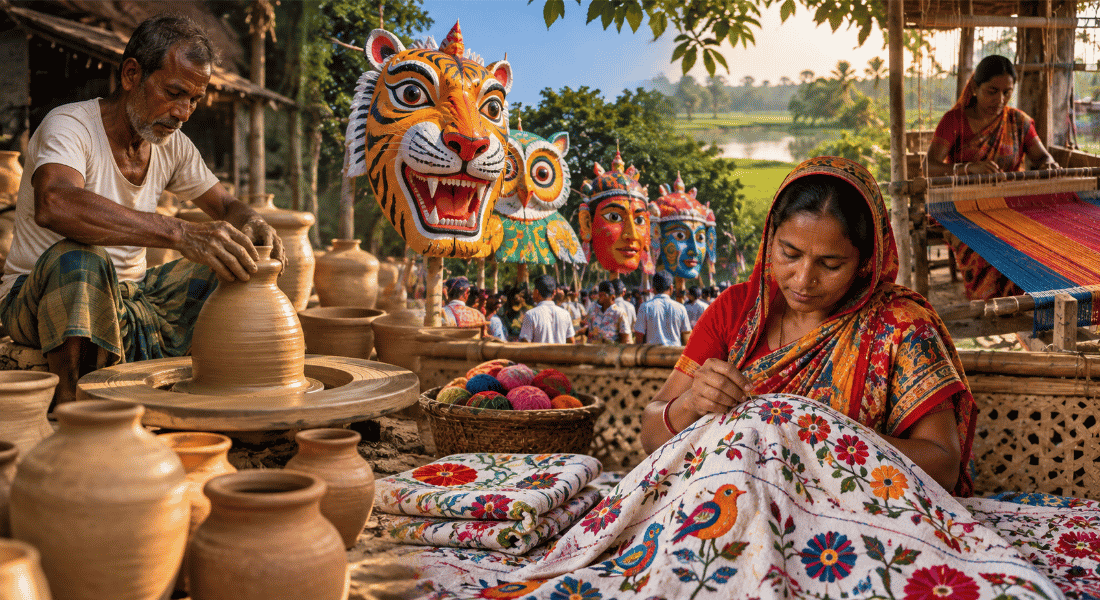
Jamdani weaving happens in villages near Dhaka. Weavers create patterns on looms. Each pattern takes weeks. A single saree sells for hundreds of dollars. You can sit with a weaver. You can watch their hands move. You can understand the skill required.
Pottery is made in many villages. Women work with clay using methods their grandmothers used. They shape bowls and pots with their hands. No wheels. No electric tools. Their hands know the material. You can try making something. You will fail. They will laugh and help. You will learn.
Bamboo work happens everywhere. Artisans create baskets, furniture, and tools from bamboo. They split it with their hands. They weave it without patterns or measurements. The final product is perfect.
Embroidery is done by women. They stitch patterns onto cloth using colored thread. Each stitch is deliberate. They create sarees, scarves, and decorations. The patterns tell stories.
When you buy these items, the craftsperson gets paid. But more importantly, you validate their work. You show that their skills have value. Young people in the family see this. They become interested in learning.
Community-Led Cultural Experiences for Travelers
Participating in Local Traditions
You do not just watch traditions in villages. You participate.
Here is what you can do:
Cook traditional meals with the family. You learn how they prepare rice. How they make fish curry. How they pickle vegetables. They explain why they use certain spices. Why they cook for certain times. The knowledge is practical and deep.
Prepare for celebrations together. You help clean the house. You help decorate. You help arrange food. You work alongside the family. You become part of the preparation, not just the event.
Dress in traditional clothes with help. A woman in the family drapes your saree. She teaches you how to move in it. She explains the patterns. You wear it to the festival.
Participate in rituals. You light oil lamps. You offer flowers at a shrine. You pour water for guests. You do what the family does.
Attend prayers or ceremonies if invited. You do not need to understand every word. You sit quietly. You observe. You show respect. That is enough.
Learning Traditional Crafts and Skills
Many families teach crafts to visitors.
This is different from taking a workshop in the city. It is slower. It is deeper.
With a pottery maker, you might spend days making one pot. The first day you learn clay preparation. The second day you shape. The third day you finish. You understand the full process.
With a weaver, you learn basic weaving. You might make a small piece. It will not be perfect. But you will understand the skill required.
With a cook, you learn not just recipes but food culture. Why rice is the center of every meal. Why fish is important. Why sweets matter on celebration days.
The family teaches you because they want you to understand their life. They do not expect you to become an expert. They expect you to gain respect for their work.
Storytelling, Music, and Cultural Exchange
The deepest experiences happen through conversation.
Sit with elders. Ask them about their life. Ask about traditions. Ask about what has changed in their village. They will talk for hours.
You will hear stories about:
How they celebrated Pahela Baishakh as children. What has stayed the same and what has changed. How their parents and grandparents celebrated.
Why they still practice certain traditions. What these traditions mean to them. How they want to pass these traditions to their children.
Challenges they face. Land becoming less productive. Young people leaving for cities. Money becoming tight. New roads changing the village.
Their hopes. That tourism might help their children stay. That the world will value their culture. That they can preserve traditions while improving life.
Music happens informally. Someone might sing. Others might join. You might learn a song. You will not sing it well. That is fine. You tried.
You share too. Tell them about your life. Your family. Your traditions. Your country. They are genuinely interested. They ask questions. They listen carefully.
This exchange changes both of you.
Homestays and Cultural Immersion Experiences
Living with Local Families
A homestay means sleeping, eating, and living in a family home.
You are not renting a room from strangers. You are staying with a family that wants you there.
Here is what daily life looks like:
You wake when the family wakes. Usually early. You eat breakfast together. Simple food. Tea and rice with vegetables.
You spend the day with the family. You might go to the fields. You might help with house chores. You might sit and talk. You participate in whatever happens.
You eat lunch together. The main meal of the day. Multiple dishes. Everyone eats from shared bowls.
The afternoon might be quiet. Rest time. You might nap. You might read. The family rests too.
You gather again for dinner. Another meal cooked by the family. You eat together.
In the evening, you sit outside. The temperature drops. Stars appear. People talk. Children play nearby. Life continues slowly.
You sleep in a clean room. You have your own space. But you are part of the household.
Sharing Traditional Meals
Food is the core of community-based tourism.
Every meal tells you something about the family and their culture.
You eat what the family eats. Not special tourist meals. Regular meals they eat every day.
Breakfast might be rice porridge with dried fish. Or flatbread with onions. Simple. Nourishing.
Lunch is always rice. With fish or meat curry. With vegetables cooked in spices. With pickles. Everything fresh. Everything cooked that morning.
Dinner is lighter. Sometimes rice again. Sometimes flatbread. Leftover curry. Fresh fruit if available.
Between meals, there is tea. Served constantly. Hot and sweet. With milk. You will drink many cups.
Traditional Pahela Baishakh foods are special:
Panta Ilish is rice soaked overnight, served with fried fish. You eat it on the morning of Pahela Baishakh. The family explains why. It connects you to agricultural traditions. It is humble food. It is also delicious.
Traditional sweets appear. Made from milk and flour. Made from rice. Made from jaggery. Each has a story. Each has been made the same way for generations.
The family teaches you to cook. You learn their methods. You learn what ingredients matter and what does not. You learn about flavors. You learn about nutrition.
You eat with your hands. You watch the family. You copy them. Your eating is clumsy at first. It becomes natural.
Building Meaningful Connections
The real value of homestays is relationships.
You arrive as a stranger. You leave as a friend.
This happens because:
You spend time together. Not scheduled time. Real time. Hours and hours. You learn how the family thinks. How they solve problems. What makes them laugh.
You face small challenges together. Language barriers. Cultural differences. Misunderstandings. You work through them. You understand each other better.
You are vulnerable together. You try new foods and might not like them. You attempt tasks and fail. You are clumsy. The family is patient. They accept you.
They share struggles. Crop failures. Money problems. Family conflicts. They trust you with real information. You listen. You care.
They see you as a person, not a tourist. They learn your name. They remember details you mentioned. They ask about your family. They show genuine interest.
You exchange contact information. You stay in touch. You send photos and messages. You become part of each other's lives.
When you return to visit years later, they are genuinely happy to see you.
Sustainable Tourism and Community Empowerment
Supporting Local Economies
Community-based tourism is economic development.
But it is development led by locals. Not outsiders.
Here is how it works:
Money goes directly to families. You pay the family who hosts you. Not a middleman. Not a company. The family gets all the money.
The family spends this money locally. They buy food from village farmers. They hire a neighbor to fix the roof. They pay local children to help with cleaning. Money circulates in the village.
Women become earners. Homestay owners are often women. They make their own decisions about their time and money. This changes family dynamics. Women gain power and independence.
Young people see opportunities. Guiding visitors. Teaching crafts. Cooking for guests. These are jobs available locally. Young people stay in villages instead of moving to cities.
Small businesses grow. A woman who cooked for one family now cooks for five families hosting visitors. She hires her daughter. She opens a small restaurant. She becomes an entrepreneur.
Seasonal income comes at the right time. Pahela Baishakh is when villages celebrate. It is also when agricultural work slows down. Tourism income at this time is perfectly timed.
Preserving Cultural Heritage
Heritage survives when it has economic value.
Community-based tourism creates this value.
Here is why traditions survive:
Young people learn old skills because tourists want to learn them. A grandfather teaches his grandson traditional fishing methods because visitors want to see it. The grandson becomes interested. He becomes skilled. The tradition continues.
Traditional arts stay alive. Musicians perform for visitors. They earn money. They teach young people. The music tradition grows.
Clothing stays traditional. When visitors want to see traditional dress, families maintain their clothes. They teach children about traditional patterns. The knowledge passes on.
Stories stay told. When visitors ask for stories, elders tell them. They think about what stories matter. They tell stories to children more intentionally. The stories survive.
Food traditions continue. Families cook traditional meals for visitors. They prepare Pahela Baishakh foods. Young people learn these recipes. The food culture survives.
Villages take pride in their heritage. When outsiders show interest and respect, locals value their traditions more. They invest in preservation. They teach the next generation intentionally.
Responsible Travel Practices
Community-based tourism requires visitors to act responsibly.
Here are basic practices:
Respect the family's home. Keep it clean. Follow their rules. Do not bring strangers without asking. Do not use their things without permission.
Respect their time. They are not entertainment. They have work to do. Contribute. Help. Don't demand constant attention.
Respect their culture. Dress appropriately during celebrations. Do not take photos of sacred rituals without asking. Do not mock traditions you do not understand.
Pay fairly. The family set a price. Pay it. If you can afford more, offer it. They might refuse. That is their choice.
Ask before taking photos. Many families want photos. Some do not. Ask first. Respect their answer.
Learn a few words of Bengali. Try to speak their language. They will appreciate your effort. You will connect better.
Listen more than you talk. This is their world. You are visiting it. Learn from them. Do not try to teach them how to live better.
Follow environmental practices. Do not litter. Use water carefully. Respect the natural surroundings that sustain the community.
Why Authentic Local Experiences Matter
Moving Beyond Traditional Sightseeing
Traditional sightseeing shows you a place. It does not help you understand it.
You might visit a famous temple. You take a photo. You move on. You learn nothing about the people or their beliefs.
Authentic local experiences are different.
You do not just see a celebration. You participate. You feel the emotions. You understand what matters to people.
You do not just taste traditional food. You learn why families eat it. You understand cultural values around food. You appreciate the skill required to cook it.
You do not just see a craft. You learn the work involved. You understand why people practice it. You gain respect for their skills.
This understanding changes how you see the world. It changes how you treat people different from you. It creates empathy.
Creating Meaningful Travel Memories
Travel should be memorable. Real memories, not photo memories.
Authentic experiences create memories that last.
You remember faces of people you met. You remember conversations. You remember how they made you feel. You remember the food. You remember the sounds. You remember how you felt.
These memories are vivid. You can return to them years later and feel the emotions again.
You probably forget typical tourist experiences. The famous building looked like it looked. You stood in a crowd. You took a photo. That is it.
But you do not forget sitting with a family on their roof at sunset. You do not forget learning to make pottery and failing repeatedly. You do not forget dancing badly while others clapped. You do not forget the meal a grandmother made especially for you.
Authentic travel creates lasting change. It opens your mind. It makes you want to travel more. It makes you want to understand people better.
Understanding Bangladesh Through Its People
You can read books about Bangladesh. You can watch videos. You learn facts.
But you understand Bangladesh through people.
When you live with a family, you learn how they think. What they worry about. What makes them happy. What they hope for.
You learn that people are both same and different. They love their families like you do. They want safety and opportunity. They want their children to be happy. But they express these desires differently. They solve problems differently. They celebrate differently.
You learn the country is more complex than news headlines suggest. Villages are not poor and sad. They are vibrant and full of life. People are not helpless. They are creative and resourceful.
You learn that change is happening. Technology is arriving. Young people are mobile. Traditions are evolving. But the core remains. Family matters. Community matters. Culture matters.
This understanding makes you a better global citizen. You see complexity where you saw simplicity. You see humanity where you saw difference.
Discover Authentic Pahela Baishakh Experiences with Otithi
Connecting Travelers with Local Communities
Otithi is a community-based tourism platform created by BRAC.
It connects you with local families across Bangladesh.
Otithi does the matching work. They meet with families. They understand what experiences they offer. They check that accommodations are clean. They confirm that families are excited to host.
They meet with travelers. They understand what you want to experience. They listen to your interests. They find families that match.
Then they connect you directly. You pay the family. The family hosts you.
Otithi provides support. If something goes wrong, they help. If you have questions, they answer. But the relationship is between you and the family.
This approach is different from traditional tour companies. You are not a customer on a tour. You are a guest in a home.
Exploring Bangladesh Beyond Traditional Tourist Routes
Otithi shows you places most tourists never see.
Not the big temples. Not the famous monuments. Not the city attractions.
Instead, villages. Towns. Places where daily life happens.
You can celebrate Pahela Baishakh in a village where the festival has happened the same way for a hundred years. You can participate in traditions unchanged. You can meet people who have lived their entire lives in the same place.
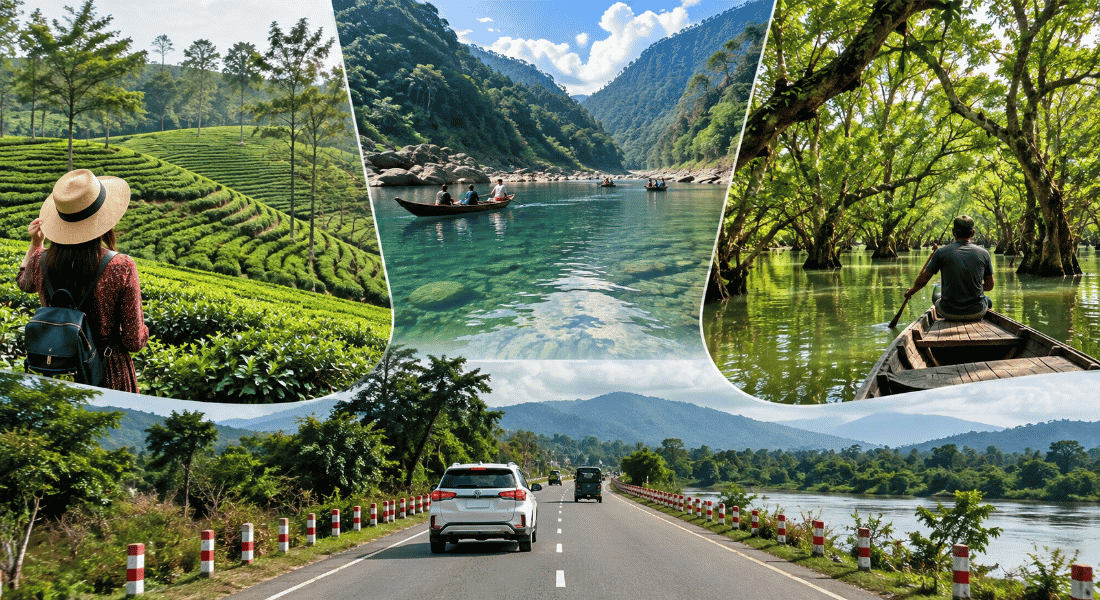
You can explore agricultural areas. You can see how rice grows. How fish are raised. How farmers manage their land.
You can visit craft communities. You can meet artisans. You can see their work happen.
You can go to places that tour guides do not go. Places that tourism is just beginning to reach. This means the experience is fresher. The traditions are less performed. The connections are more genuine.
Supporting Sustainable Community-Based Tourism
Otithi is built on sustainable principles.
Environmental sustainability. The experiences do not harm the environment. They do not overuse resources. They do not create waste.
Economic sustainability. Families earn enough money to continue hosting. They can improve their lives. They can invest in their homes and businesses.
Cultural sustainability. Traditions are preserved and valued. Young people learn old knowledge. Heritage survives and evolves.
Community ownership. Communities decide what happens. They set prices. They choose what experiences to offer. They maintain control.
When you use Otithi, you support all of this.
Your money goes directly to the family. Your experience preserves traditions. Your presence shows that local culture has value. Your participation creates opportunities.
You become part of the solution. You help villages thrive. You help traditions survive. You help communities grow.
Frequently Asked Questions
What is community-based tourism in Bangladesh?
Community-based tourism connects you directly with local families. You stay in their homes. You participate in their daily lives and celebrations. The family earns income from hosting you. You learn authentic culture. Money stays in the community instead of going to large companies.
How can visitors celebrate Pahela Baishakh with local communities?
You can stay with families in villages during Pahela Baishakh. You participate in celebrations. You eat traditional meals together. You watch folk performances. You visit village fairs. You help prepare for the festival. You join community gatherings. Otithi helps arrange these experiences.
What are the benefits of village tourism in Bangladesh?
Benefits for travelers: authentic experiences, meaningful connections, cultural understanding.
Benefits for communities: direct income for families, economic development in villages, preservation of traditions, opportunities for young people, women's empowerment.
Benefits for culture: heritage survives, traditions are valued, knowledge passes to new generations.
Are homestay experiences available during Pahela Baishakh?
Yes. Many families across Bangladesh offer homestays during Pahela Baishakh. Otithi connects you with families that welcome guests during the festival. You should book early because homestays are popular during this celebration.
How does community-based tourism support sustainable development?
Community-based tourism creates income for local families without relying on large companies. Money stays in villages. Environmental impact is controlled because families manage their own land. Cultural traditions are preserved because they have economic value. Young people stay in villages because opportunities exist locally. Education improves because families have resources. Healthcare improves because families earn money.
Take Action
You now understand what community-based tourism offers.
You know what awaits you in village celebrations.
You see why this matters to families and traditions.
So what next?
Visit Otithi. Explore available experiences. Read about families hosting guests. Look at village celebrations happening during Pahela Baishakh.
Choose an experience that calls to you. Book it. Prepare for it.
Plan to arrive with an open mind. Expect your comfort to be basic. Expect to be challenged. Expect to grow.
Celebrate Pahela Baishakh with people who have celebrated it their whole lives. Live in their home. Eat their food. Learn their traditions. Dance with their community.
Return changed. Return with relationships that last. Return as someone who understands Bangladesh deeply.
This is what Otithi offers you. Not a tour. Not a package. A doorway into real life.
Open it.
Discover Otithi at https://Otithi.brac.net
Explore available experiences at https://Otithi.brac.net/packages
Learn more about their community-based tourism model at https://Otithi.brac.net/about