Blog
21
Jul
Dhamrai Durga Puja history
Dhamrai Durga Puja: A History of Bangladesh's Most Spectacular Festival
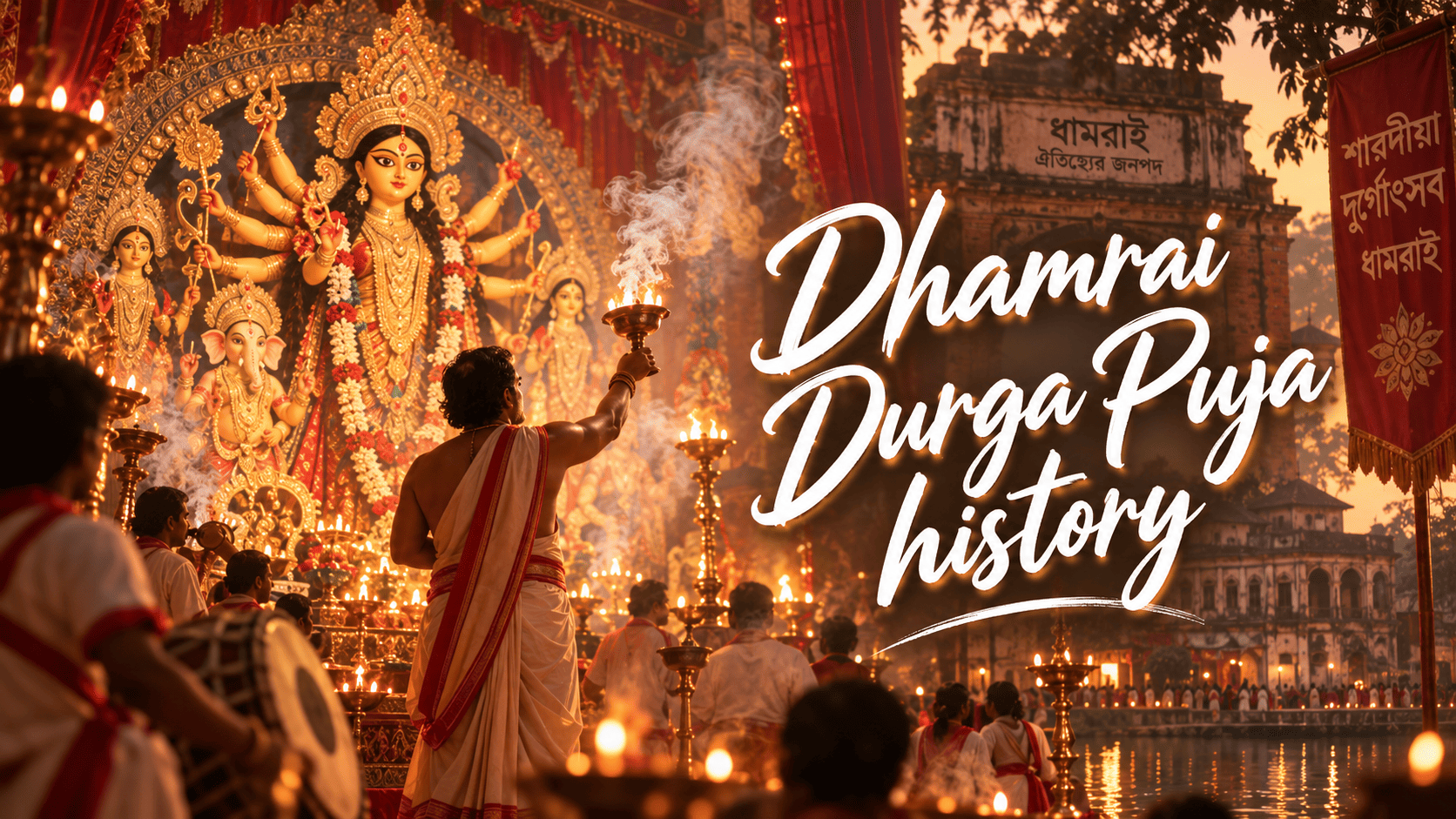
Every year, a small town about 40 kilometers northwest of Dhaka transforms into something extraordinary. Thousands of visitors pour into Dhamrai, not for its everyday charm, but for one of the most spectacular Durga Puja celebrations in Bangladesh.
The Dhamrai Durga Puja has a history that stretches back centuries. It's not just a religious festival – it's a living tradition that has survived wars, partition, and the passage of time. For anyone interested in Bangladesh's cultural heritage, understanding the Dhamrai Durga Puja history is essential.
The Origins of Dhamrai Durga Puja
Dhamrai's connection to Durga Puja runs deep. The tradition began during the Mughal period, when local zamindars (landlords) first sponsored the celebrations. These wealthy families competed to host the most elaborate pujas, and Dhamrai quickly emerged as a center of this cultural rivalry.
The puja in Dhamrai was always different from other celebrations. While most areas held modest community pujas, Dhamrai's zamindars invested heavily in artistry and scale. They commissioned skilled craftsmen from across Bengal to create the most intricate idols and decorations.
By the late 19th century, Dhamrai's Durga Puja had gained a reputation that extended far beyond the region. People traveled from Dhaka, Mymensingh, and even as far as Kolkata to witness the celebrations. The town became synonymous with grand Durga Puja celebrations.
The Artistic Legacy
What truly sets Dhamrai apart is its artistic tradition. The idol makers of Dhamrai have passed their skills down through generations. Each year, they create Durga idols that are recognized as some of the most beautiful in Bangladesh.
The art form combines:
Traditional clay sculpting – Using techniques perfected over centuries
Intricate detailing – The ornaments and expressions are remarkably refined
Storytelling through art – Each idol tells the story of Durga's victory over Mahishasura
The puja also features elaborate pandal decorations. The temporary structures are not just places of worship – they're works of art that showcase themes from mythology, history, and even contemporary issues.
The Puja Through History
The British Period
During the British era, Dhamrai's Durga Puja flourished. The zamindars had both wealth and status, and they used the puja to demonstrate their prestige. The celebrations grew increasingly elaborate, with fireworks, cultural performances, and feasts that lasted for days.
The puja also became a symbol of Bengali cultural identity. At a time when colonial rule was reshaping the subcontinent, festivals like Dhamrai's Durga Puja helped preserve traditional arts and community bonds.
Partition and Its Impact
The partition of Bengal in 1947 was a turning point. Many Hindu zamindars who had patronized the puja left for India. The newly formed East Pakistan faced significant challenges, and cultural celebrations struggled.
But the Dhamrai Durga Puja didn't die. Local communities stepped in to fill the gap left by the departing zamindars. They pooled resources and continued the tradition, even if on a smaller scale.
The Liberation War Years
The 1971 Liberation War brought immense hardship. Dhamrai, like the rest of Bangladesh, faced violence and destruction. Many cultural institutions were damaged or destroyed.
The Durga Puja celebrations in Dhamrai were suspended during the war. But the tradition survived the conflict. In the years following independence, the communities of Dhamrai gradually revived the puja.
Revival and Recognition
The 1980s and 1990s saw a revival of Dhamrai's Durga Puja. The local community worked tirelessly to restore the tradition to its former glory. They sought out remaining artisans, rebuilt the infrastructure, and rekindled the spirit of the celebration.
Today, the Dhamrai Durga Puja is recognized as one of Bangladesh's most important cultural events. It has been featured in numerous documentaries and travel articles. The government has also recognized its significance, offering support for its preservation.
What Makes Dhamrai's Puja Unique
The Idol Making Tradition
Dhamrai is home to some of Bangladesh's finest idol makers. These artisans work for months to create the Durga idols that are the centerpiece of the puja. The process is intricate and time-consuming:
Sculpting – The clay is shaped by hand over a straw framework
Drying – The idols are left to dry naturally, a process that takes weeks
Painting – Traditional natural colors are used
Decoration – The idols are adorned with ornaments and clothing
The skill is passed down through families. Young artisans learn from their elders, preserving techniques that have been refined over generations.
The Pandal Architecture
The pandals in Dhamrai are known for their artistic quality. Unlike the temporary structures seen elsewhere, Dhamrai's pandals are carefully designed and constructed. They often incorporate traditional Bengali architectural elements.
Each year, the pandals feature different themes. Some celebrate mythology, others highlight social issues, and some simply showcase artistic creativity. Walking through Dhamrai during Durga Puja is like walking through an open-air art gallery.
The Community Spirit
What truly sets Dhamrai apart is the community involvement. The puja is organized by local families who have been involved for generations. They contribute time, money, and effort to ensure the celebration continues.
This is not a commercialized event. It's a community celebration where everyone – Hindu and Muslim, young and old – participates. Visitors are welcomed warmly, and the spirit of hospitality is genuine.
Planning Your Visit to Dhamrai During Puja
When to Go
Dhamrai's Durga Puja follows the same calendar as other celebrations. The main days are:
Ashtami – The most significant day, with the largest celebrations
Navami – Final day of worship
Dashami – The immersion day, with processions to the river
Ashtami is the best day to experience the full grandeur of the puja. The pandals are at their most elaborate, and the cultural programs are in full swing.
Getting to Dhamrai
Distance from Dhaka: Approximately 40 kilometers
Travel time: 1.5–2 hours by road
By bus: Buses from Dhaka's Gabtoli bus terminal to Dhamrai. The journey takes about 2 hours. Buses run regularly during the puja season.
By private car: The most convenient option. Take the Dhaka-Aricha highway and follow the signs to Dhamrai. The roads are generally good, but expect heavy traffic during the puja days.
By CNG: Available from Dhaka, but more expensive. Not recommended for the return journey as availability is limited.
For other day trip ideas near Dhaka, check our guide on how to plan a Durga Puja day trip from Dhaka.
What to See in Dhamrai
The main pandals – The central pandals are the most elaborate. Visit during the day for the artistic details and in the evening for the lighting.
The idol workshop – Some artisans allow visitors to see the idol-making process in the weeks leading up to the puja.
The immersion procession – On Dashami, the idols are taken to the river for immersion. This is a spectacular and emotional procession.
Cultural performances – In the evenings, you'll find traditional music and dance performances.
Local food stalls – Dhamrai's puja is famous for its food. Try the khichuri, nimki, and local sweets.
For a more detailed list, check our guide on things to see at Dhamrai Puja.
The Living Heritage of Dhamrai
Dhamrai's Durga Puja is more than a festival – it's a living heritage that connects Bangladesh to its cultural roots. The tradition has survived colonialism, partition, war, and modernization. Each year, it demonstrates the resilience of Bengali culture.
For visitors, the experience offers a glimpse into a world where art, faith, and community come together. The colors, sounds, and flavors are unforgettable. The hospitality is warm. And the history is deeply moving.
The Dhamrai Durga Puja is a must-visit for anyone interested in Bangladesh's intangible cultural heritage.
For more on Bangladesh's cultural heritage, explore our guide on Bangladesh cultural tourism, heritage tours, and sustainable travel.
Conclusion
The history of Dhamrai Durga Puja is a story of resilience. A tradition that began under Mughal patronage, flourished during the British era, survived the traumas of partition and war, and continues to thrive today.
What makes it special is not just the scale or the artistry. It's the community spirit that has kept the tradition alive for centuries. It's the artisans who pass their skills from generation to generation. It's the families who contribute their time and resources year after year.
If you're visiting Bangladesh during Durga Puja, Dhamrai should be on your list. It's not just a celebration – it's a journey into the soul of Bengali culture.
FAQ Questions
1. What is the history of Dhamrai Durga Puja?
The Dhamrai Durga Puja dates back to the Mughal period when local zamindars sponsored elaborate celebrations. The tradition has survived through centuries, including partition and the Liberation War.
2. How far is Dhamrai from Dhaka?
Dhamrai is approximately 40 kilometers from Dhaka. The journey takes about 1.5–2 hours by road.
3. What is special about Dhamrai's Durga Puja?
Dhamrai is known for its artistic idols, elaborate pandals, and strong community involvement. The puja has a reputation as one of Bangladesh's most spectacular Durga Puja celebrations.
4. When is the best day to visit Dhamrai for Durga Puja?
Ashtami is the most significant day, with the grandest celebrations. The idol immersion on Dashami is also spectacular but more crowded.
5. How can I travel to Dhamrai from Dhaka?
You can take a bus from Gabtoli bus terminal, or hire a private car. Travel time is 1.5–2 hours.
6. What should I see at Dhamrai Durga Puja?
Visit the main pandals, see the artistry of the idols, watch the cultural performances, try the local food, and if possible, visit the idol workshops before the puja begins.
Want to experience the history and grandeur of Dhamrai Durga Puja? Explore Otithi's curated cultural tours and packages for an authentic, guided experience of Bangladesh's most spectacular festival.