Blog
03
Aug
How To Travel From Sylhet To Sreemangal, Jaflong & Ratargul
How to Travel from Sylhet to Sreemangal, Jaflong, Ratargul: The Complete 2026 Transportation Guide
Introduction
Sylhet division contains Bangladesh's most extraordinary landscapes, yet travelers waste precious hours stranded at bus stations or overpaying for unreliable transport simply because they lack proper route knowledge. Most visitors miss sunrise at Ratargul or sunset at Jaflong not from poor planning, but from not understanding how to travel from Sylhet to Sreemangal, Jaflong, Ratargul efficiently. This guide eliminates that frustration. You will learn exact routes, vehicle options, fare ranges, departure times, and insider shortcuts that transform logistical headaches into smooth journeys. By the end, you will possess the transportation mastery that distinguishes relaxed explorers from stressed tourists.
Table of Contents
Understanding Sylhet's Regional Geography
How to Travel from Sylhet to Sreemangal: The Tea Capital Route
How to Travel from Sylhet to Jaflong: The Stone Collector's Path
How to Travel from Sylhet to Ratargul: The Swamp Forest Journey
Combined Routes and Multi-Destination Planning
Transportation Options Comparison Table
Vehicle Types and Fare Breakdown
Best Departure Times for Each Destination
Seasonal Considerations Affecting Travel
Safety Tips for Sylhet Regional Travel
Booking Transport Through Otithi Tour Packages
Sample Itineraries Using Efficient Routes
Hidden Stops Worth Adding to Your Journey
Frequently Asked Questions
Final Travel Checklist
Understanding Sylhet's Regional Geography
Before mastering how to travel from Sylhet to Sreemangal, Jaflong, Ratargul, understanding the region's layout proves essential. Sylhet city serves as the natural hub for northeastern Bangladesh exploration, with roads radiating outward toward each major attraction. Unlike Dhaka's centralized transport system, Sylhet offers multiple departure points depending on your destination—using the wrong terminal wastes time and money.
Sreemangal lies south of Sylhet city along the Dhaka-Sylhet Highway, making it the most straightforward journey in terms of road quality. Jaflong sits north toward the Indian border, with roads that wind through increasingly hilly terrain. Ratargul occupies the northwestern quadrant, accessible via smaller rural roads that branch off the main Sylhet-Sunamganj highway.
Geography dictates not only routes but also optimal timing. Morning fog affects Jaflong's hilly sections more severely than Sreemangal's highway approach. Monsoon rains transform Ratargul's access roads unpredictably. Local drivers understand these nuances—one reason why guided Sylhet tour packages through services like Otithi often prove more reliable than independent navigation.
How to Travel from Sylhet to Sreemangal: The Tea Capital Route {#sylhet-to-sreemangal}
Understanding the Journey
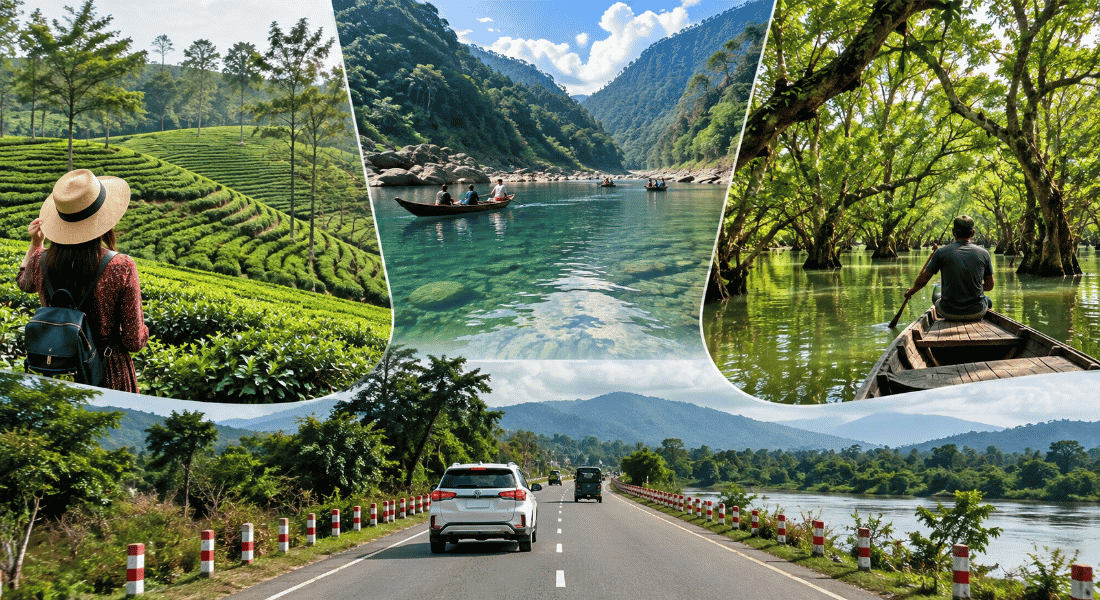
How to travel from Sylhet to Sreemangal efficiently begins with recognizing this as the region's best-maintained route. The Dhaka-Sylhet Highway connects both cities, offering smooth asphalt surfaces and regular fuel stations. Sreemangal, renowned as Bangladesh's tea capital, attracts visitors for its rolling tea estates, Lawachara National Park, and the famous seven-layer tea. The 80-kilometer journey typically requires two to two-and-a-half hours, depending on traffic and vehicle type.
Bus Options: Budget-Friendly and Reliable
Buses represent the most economical method for how to travel from Sylhet to Sreemangal. Kadamtali Bus Stand serves as the primary departure point, though some services also operate from Subhanighat. AC buses offer comfortable seating and scheduled departure times, while non-AC local buses provide maximum flexibility with continuous service throughout daylight hours.
The bus journey itself passes through gradually transitioning landscapes—urban Sylhet gives way to rice paddies, which eventually surrender to the tea gardens announcing Sreemangal's approach. Window seats on the right side offer superior views of tea estates during the final 20 kilometers.
Pro Tip: Morning buses departing before 8 AM typically encounter less traffic and arrive before the midday heat intensifies. If your Sreemangal visit focuses on Lawachara National Park's wildlife, early arrival significantly improves spotting opportunities.
CNG and Auto-Rickshaw Options
For travelers preferring private transport without full car expenses, CNG-powered auto-rickshaws offer an intermediate solution for how to travel from Sylhet to Sreemangal. Negotiate at the Kadamtali area or arrange through your hotel. Expect to pay BDT 1,200-1,800 for the full journey, with the vehicle accommodating two to three passengers comfortably.
CNGs travel slower than buses or cars, extending the journey to approximately three hours. However, the open-sided design provides unobstructed views and photo opportunities impossible through bus windows. Drivers typically welcome brief stops at scenic points—a small tip (BDT 100-200) encourages their cooperation.
Private Car and Microbus Hire
Private vehicle hire offers the most flexible approach for how to travel from Sylhet to Sreemangal. Negotiate directly with drivers near Amberkhana intersection or arrange through your accommodation. Reputable tour operators like Otithi include private transport in their comprehensive Sylhet tour packages, eliminating negotiation hassles and ensuring vehicle quality standards.
The private car advantage extends beyond comfort—drivers familiar with Sreemangal can navigate directly to specific tea estates, the seven-layer tea stalls, and Lawachara's optimal entry points without the delays of public transport terminals. This efficiency becomes particularly valuable when combining Sreemangal with other destinations in a single day.
Train Connection: The Scenic Alternative
Though less direct than road options, the train offers a uniquely atmospheric method for how to travel from Sylhet to Sreemangal. The Sylhet-Dhaka intercity trains stop at Sreemangal station, with the rail journey taking approximately 2.5-3 hours. Train tickets cost BDT 150-400 depending on class.
The railway route passes through countryside rarely visible from highways, offering photographers and train enthusiasts a distinctive perspective. Sreemangal station itself, established during the British colonial period, retains architectural character that rewards exploration.
How to Travel from Sylhet to Jaflong: The Stone Collector's Path {#sylhet-to-jaflong}
Route Overview and Preparation
Understanding how to travel from Sylhet to Jaflong requires acknowledging this route's distinct character. Unlike the highway approach to Sreemangal, Jaflong lies north along increasingly narrow roads that climb through Khasi hills toward the Indian border. The 56-kilometer journey typically demands 1.5 to 2 hours, though traffic and road conditions introduce variability.
Jaflong rewards travelers with the stunning Dawki River, whose crystal-clear waters reveal the riverbed 20-30 feet below during dry season. Stone collection activities, while environmentally controversial, create a unique cultural landscape where workers sift river stones against dramatic mountain backdrops. The India-Bangladesh border adds geopolitical intrigue, with Meghalaya's hills visible across the water.
CNG Auto-Rickshaw: The Budget Adventurer's Choice
For those researching how to travel from Sylhet to Jaflong on a budget, CNG auto-rickshaws represent the most common independent option. Vehicles gather near Amberkhana Point and Sylhet Bus Terminal, with drivers actively seeking Jaflong-bound passengers.
CNG journeys to Jaflong offer an immersive experience—the open vehicle design means smelling tea gardens, feeling temperature changes as elevation increases, and hearing birdsong uninterrupted by glass barriers. The trade-off involves dust exposure on drier days and vulnerability to sudden rain showers. Carrying a scarf or light shawl provides multipurpose protection.
The road to Jaflong passes through several small markets and villages worth noting for return-journey exploration. Tamabil, the border checkpoint town, offers border-market goods and distinctive photography opportunities where Bangladesh and India visually converge.
Private Car and Microbus for Jaflong
Private vehicles significantly improve the Jaflong experience, particularly for families or groups. The ability to stop at viewpoints along the hilly approach road, linger at particularly beautiful river sections, and maintain climate-controlled comfort transforms the journey. When you book through Otithi's Sylhet Serenity, Swamp & Heritage Tour, private transport with experienced drivers familiar with optimal Jaflong viewpoints comes included.
The Jaflong road's final section involves rougher surfaces where lower-clearance sedans require careful navigation. SUVs or jeeps handle these conditions most capably, though thousands of sedan trips complete the journey annually without incident. During monsoon season, the SUV advantage becomes more pronounced.
Shared Jeep Services
A lesser-known option for how to travel from Sylhet to Jaflong involves shared jeep services departing from near Amberkhana. These vehicles, typically Mahindra or Toyota models, wait until filling with 8-10 passengers before departing. Fares range BDT 150-250 per person, making this the most economical motorized option.
Shared jeeps offer cultural immersion impossible in private transport—conversations with locals, exposure to Sylheti music preferences, and the collective experience of navigating border-area roads. The trade-offs include unpredictable waiting times (vehicles depart only when full), cramped seating, and limited baggage space.
How to Travel from Sylhet to Ratargul: The Swamp Forest Journey {#sylhet-to-ratargul}
The Unique Access Challenge
How to travel from Sylhet to Ratargul differs fundamentally from the other routes because the journey involves both road transport and water navigation. Ratargul Swamp Forest, Bangladesh's only freshwater swamp forest, requires boat access for meaningful exploration. The 45-kilometer road journey from Sylhet city to the Gowainghat boat landing point typically takes 1.5 to 2 hours, followed by a 30-45 minute boat ride into the forest proper.
The road portion passes through increasingly rural landscapes as you approach Gowainghat upazila. Rice paddies, small villages, and eventually the Surma River's broader floodplain characterize the route. Unlike the well-marked highway to Sreemangal or the border road to Jaflong, Ratargul's access involves smaller roads where signage proves inconsistent.
Combined Transport: Vehicle and Boat Requirements
The dual-transport requirement makes Ratargul slightly more complex when learning how to travel from Sylhet to Sreemangal, Jaflong, Ratargul efficiently. Many travelers find that booking through experienced operators like Otithi, who handle both road and boat arrangements seamlessly, eliminates the coordination challenges of independent travel.
Boat availability at Gowainghat varies seasonally. During peak monsoon (July-September), when Ratargul appears most dramatic, boat operators maintain regular presence. During drier months (December-February), advance arrangements through local contacts or tour operators prevent arrival at an empty landing point.
The Boat Ride Experience
The boat journey into Ratargul transforms transportation into attraction. As your vessel leaves Gowainghat, the Surma River widens before branching into smaller channels that eventually penetrate the swamp forest. During monsoon months, water levels submerge the forest floor completely, allowing boats to navigate between tree trunks in scenes reminiscent of Amazonian flooded forests.
Dry season (November-May) reveals the forest floor while maintaining sufficient water for navigation. Each season offers distinct experiences—monsoon for dramatic water levels and lush canopy, dry season for walking possibilities on exposed ground and different photographic compositions.
Critical Advice: Book the earliest possible morning boat for Ratargul. The swamp forest's mystical quality peaks during early hours when mist rises from water surfaces and wildlife remains active. Midday visits lose atmospheric qualities and encounter larger crowds. Understanding this timing nuance separates those who merely visit Ratargul from those who truly experience it.
Combined Routes and Multi-Destination Planning {#combined-routes}
Logical Combinations Based on Geography
Geography dictates logical combinations when planning how to travel from Sylhet to Sreemangal, Jaflong, Ratargul across multiple days. Jaflong and Ratargul, both lying north and northwest of Sylhet respectively, combine more naturally than either with south-located Sreemangal.
Ambitious travelers sometimes attempt all three destinations in two days using a Day 1 Jaflong-Ratargul combination followed by Day 2 dedicated to Sreemangal. This aggressive schedule demands private transport throughout and early morning departures. The Sylhet Serenity, Swamp & Heritage Tour through Otithi expertly handles this multi-destination complexity, allowing travelers to focus on experiences rather than logistics.
Multi-Destination Fare Estimation
Transportation Options Comparison Table {#transportation-comparison}
This comparison matrix helps travelers match transport choices to priorities when determining how to travel from Sylhet to Sreemangal, Jaflong, Ratargul. Budget-focused travelers gravitate toward buses and shared jeeps for appropriate routes. Comfort-seeking visitors justify private car expenses through superior experience quality. The train offers an atmospheric middle ground, though route limitations restrict its applicability to Sreemangal journeys.
Vehicle Types and Fare Breakdown {#vehicle-fare-breakdown}
CNG Auto-Rickshaw Detailed Fare Guide
CNG fares fluctuate based on fuel prices, seasonal demand, and negotiation skills. Morning hires typically cost more than afternoon arrangements, while festival periods (Eid, Durga Puja) see significant increases. Always confirm whether quoted prices include waiting time—this common misunderstanding creates unnecessary disputes.
Private Car Detailed Fare Guide
Private car hire through hotels typically costs 15-25% more than direct driver negotiation but offers accountability and quality assurance. The Otithi tour packages include pre-arranged private transport with thoroughly vetted drivers, eliminating the uncertainty of street-level negotiations entirely.
Best Departure Times for Each Destination {#departure-times}
Timing dramatically impacts destination experiences when learning how to travel from Sylhet to Sreemangal, Jaflong, Ratargul. Ratargul specifically transforms between early morning and midday—the difference between an ethereal mist-shrouded wonderland and a crowded, ordinary boat ride. Jaflong's Dawki River displays its famous clarity best during morning hours before sediment disturbance from increased activity.
Sreemangal's tea gardens photograph most beautifully during the "golden hours" of early morning and late afternoon. Lawachara National Park's hoolock gibbons vocalize most actively during dawn hours, rewarding early arrivals with both auditory and visual wildlife experiences.
Seasonal Considerations Affecting Travel {#seasonal-considerations}
Monsoon season transforms how to travel from Sylhet to Sreemangal, Jaflong, Ratargul most dramatically. Ratargul's access road near Gowainghat may experience flooding that smaller vehicles cannot navigate. Jaflong's hilly sections become slippery, requiring experienced drivers familiar with wet-weather techniques. Sreemangal's highway approach remains most reliable year-round.
Despite these challenges, monsoon offers Ratargul at its most spectacular—water levels submerge the forest floor completely, creating the iconic "floating forest" that draws visitors worldwide. The trade-off between easier travel conditions and superior destination experiences defines seasonal decision-making for many travelers.
External Resource: For current road conditions and flood warnings affecting Sylhet division, consult the Bangladesh Road Transport Authority updates before departure.
Safety Tips for Sylhet Regional Travel {#safety-tips}
Safety considerations when mastering how to travel from Sylhet to Sreemangal, Jaflong, Ratargul extend beyond typical urban precautions. The Jaflong road involves genuine mountain driving with steep drop-offs in certain sections. Ratargul requires boat safety awareness—life jackets should be available and worn, particularly during monsoon's higher water levels.
Travel insurance covering medical evacuation provides peace of mind for international visitors exploring these relatively remote areas. Domestic travelers should verify that existing policies cover the specific activities planned.
External Resource: Review Lonely Planet's Bangladesh safety guidance for comprehensive traveler safety information applicable to Sylhet region exploration.
Booking Transport Through Otithi Tour Packages {#booking-through-otithi}
Why Tour Packages Simplify Transportation
The complexity of coordinating how to travel from Sylhet to Sreemangal, Jaflong, Ratargul independently explains why many travelers ultimately prefer comprehensive tour packages. The Sylhet Serenity, Swamp & Heritage Tour eliminates every transportation concern—private vehicles with experienced drivers handle all road segments, pre-arranged boats await at Ratargul, and the itinerary timing reflects years of local experience optimizing each destination visit.
The Sylhet Luxe Lalakhal Couple Retreat similarly includes seamless transport from Sylhet to the Nazimgarh Lalakhal Resort and all included activities. For travelers valuing experience quality over budget minimization, these packages transform transportation from stressful challenge to invisible service.
When you browse all available tours on the Otithi platform, each package details exactly what transport modes are included, vehicle types provided, and any optional additions available. The consultation process before booking allows discussing specific transport preferences or concerns.
Sample Itineraries Using Efficient Routes {#sample-itineraries}
One-Day Intensive: Jaflong + Ratargul
This aggressive schedule demands private transport throughout—CNG auto-rickshaws lack the speed and reliability for this combined journey. The route works best during winter's longer daylight hours and stable weather.
Relaxed Two-Day: Sreemangal Deep Exploration
Ultimate Three-Day: All Destinations (Otithi Recommended)
This comprehensive itinerary mirrors the Sylhet Serenity, Swamp & Heritage Tour structure, with Otithi handling all logistics:
Hidden Stops Worth Adding to Your Journey {#hidden-stops}
These lesser-known stops reward travelers who master how to travel from Sylhet to Sreemangal, Jaflong, Ratargul with private transport flexibility. Bus and shared transport passengers typically bypass these locations entirely. Private car or CNG travelers can request brief stops that add minimal time while significantly enriching the overall experience.
External Resource: For detailed information about Madhabkunda Waterfall access and conditions, consult Bangladesh Tourism Board's Sylhet division page.
Frequently Asked Questions {#faq}
Q: Can I visit all three destinations in a single day?
A: Visiting Sreemangal, Jaflong, and Ratargul in one day is physically possible but not recommended. The combined distance exceeds 180 kilometers with varying road conditions, leaving inadequate time at each destination. Two days minimum, ideally three, allows meaningful experiences.
Q: Which destination is easiest to reach independently?
A: Sreemangal offers the most straightforward independent access via regular buses on a well-maintained highway. Jaflong follows as second-easiest, while Ratargul requires the most coordination due to the boat component.
Q: How much should I budget for transportation across all three destinations?
A: Budget travelers using buses and shared transport: BDT 1,500-2,500 total. Mid-range with private CNG/occasional car: BDT 5,000-8,000. Premium with private car throughout and quality boats: BDT 8,000-12,000. Otithi's all-inclusive packages bundle transport with accommodation, guides, and activities for comprehensive value.
Q: Are these routes safe for solo female travelers?
A: Generally yes, with standard precautions. Daytime travel on main routes presents minimal concerns. Private transport through reputable providers like Otithi offers additional security through vetted drivers and established protocols. Avoid isolated roadside waits after dark.
Q: What happens if my vehicle breaks down on remote roads?
A: This scenario underscores the value of experienced tour operators. Private hires should include driver phone numbers and backup contacts. CNG drivers typically maintain networks for mechanical assistance. The Jaflong and Ratargul roads pass through populated areas at regular intervals, so complete isolation rarely occurs.
Q: Do I need special permits for Jaflong's border area?
A: The main Jaflong tourist area requires no special permits. However, photographing border installations is prohibited and enforced. Your driver or guide will indicate any restricted zones.
Final Travel Checklist {#travel-checklist}
Conclusion: Your Road to Sylhet's Treasures
Mastering how to travel from Sylhet to Sreemangal, Jaflong, Ratargul transforms a potentially frustrating logistical puzzle into a seamless adventure through some of Bangladesh's most extraordinary landscapes. The tea gardens of Sreemangal, the crystal waters of Jaflong, and the mystical swamp forest of Ratargul each reward travelers differently, yet all demand thoughtful approach to access.
Independent travelers armed with this guide's route details, fare tables, and timing recommendations can navigate these journeys confidently. Those preferring to exchange transportation planning for pure experience appreciation will find Otithi's comprehensive tour packages deliver precisely that trade-off.
The road to Sreemangal winds south through increasingly green landscapes toward the tea capital. The path to Jaflong climbs north through hills that preview the destination's drama. The route to Ratargul leads northwest before surrendering to water, where boats complete what roads began. Each journey differs, yet all deliver travelers to places where Bangladesh's natural and cultural heritage shines brightest.
Book your transport. Pack your curiosity. Sylhet's treasures await.