Blog
26
Jul
Old Dhaka heritage travel guide
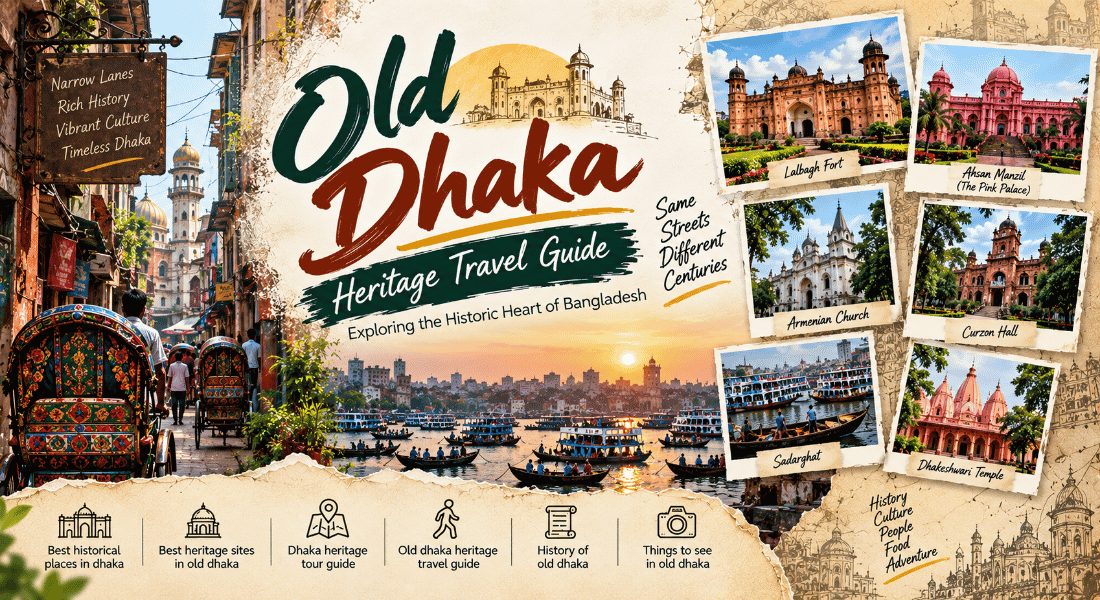
Old Dhaka Heritage Travel Guide: Exploring the Historic Heart of Bangladesh
The narrow lanes of Old Dhaka are like the pages of a living history book. Every turn reveals another building with a story to tell. The sounds, the smells, the chaos, and the beauty all come together to create an experience unlike any other.
For travelers who want to understand Bangladesh beyond the modern city, Old Dhaka is essential. But navigating its labyrinthine streets can be challenging. This heritage travel guide covers everything you need to know – the must-see sites, how to get around, what to eat, and how to make the most of your visit.
Why Visit Old Dhaka?
Old Dhaka is the soul of Bangladesh's capital. It's where the city began, and it's where the country's history is most visible. The buildings that line the narrow lanes tell the story of centuries – from Mughal rule to British colonialism to independence.
What makes Old Dhaka special is that it's not a museum. It's a living, breathing neighborhood. People live, work, and trade in these historic streets. The heritage is woven into daily life.
For history lovers: The Mughal and colonial architecture is remarkable
For photographers: The streets are alive with color and movement
For food enthusiasts: Old Dhaka is famous for its culinary traditions
For cultural travelers: This is where you'll experience the most authentic side of Dhaka
For a comprehensive list of what to see, check our guide on best historical places in Dhaka.
Getting to Old Dhaka
From Dhaka City Center
By rickshaw: The most authentic way to enter Old Dhaka. Rickshaws can navigate the narrow lanes better than cars.
By CNG auto-rickshaw: Faster than rickshaws but less maneuverable in the narrowest lanes.
By car: You can drive to the edge of Old Dhaka, but you'll need to park and walk. Parking is limited.
By public transport: Buses and minibuses connect to Old Dhaka, but navigating the routes can be confusing for visitors.
From Outside Dhaka
By air: Most international and domestic flights arrive at Hazrat Shahjalal International Airport. From there, take a taxi or CNG to Old Dhaka.
By train: If arriving by train, you'll arrive at either Kamalapur Railway Station or Airport Railway Station. Take a rickshaw or CNG to Old Dhaka.
By bus: Multiple bus terminals around Dhaka connect to different parts of the city. The most convenient for Old Dhaka is the Gulistan area.
Suggested Arrival Point
The best starting point for exploring Old Dhaka is near the Sadarghat riverfront or the Gulistan area. Both locations give you easy access to the main heritage sites.
When to Visit
Best Time of Year
October to March: The most comfortable weather for walking. Temperatures are cooler and humidity is lower.
April to June: Hot and humid. If visiting, start your exploration very early in the morning.
July to September: Monsoon season. Heavy rain makes walking difficult. Some sites may be closed or partially inaccessible.
Best Time of Day
Morning (6–10 AM): Coolest time, best light for photography, sites are less crowded
Late afternoon (3–5 PM): Moderate heat, good light for photography
Evening (5–8 PM): The lanes come alive with street food and activity
Avoid: Midday (11 AM–3 PM) in summer months
Heritage Sites Opening Hours
Must-See Heritage Sites
Lalbagh Fort
Lalbagh Fort is Old Dhaka's most important Mughal monument. Construction began in 1678 under Prince Muhammad Azam, but the fort was never completed. Despite this, what remains is impressive.
What you'll see:
The three-domed mosque
The Diwan-i-Aam (Hall of Public Audience)
The tomb of Pari Bibi with its beautiful marble
The fort walls and gateways
Time required: 1.5–2 hours
Entry fee: Approximately 200 BDT (foreigners)
Location: Lalbagh area
For more details on visiting, check our guide on best heritage sites in Old Dhaka.
Ahsan Manzil (The Pink Palace)
Ahsan Manzil was the official residence of the Dhaka Nawab family. Built in 1872, it's Dhaka's most iconic colonial-era building.
What you'll see:
The grand Durbar Hall with its European chandeliers
The Nawab's private quarters
The beautifully restored interior
The museum with artifacts from the British period
The gardens overlooking the Buriganga River
Time required: 1.5–2 hours
Entry fee: Approximately 300 BDT (foreigners)
Opening hours: 10 AM–5 PM (closed Thursday)
Location: Kumartoli, on the banks of the Buriganga River
The Armenian Church
The Armenian Church is one of the oldest Christian structures in Bangladesh. It was built in 1781 by the Armenian community.
What you'll see:
The distinctive architecture with its spire
The historical graveyard with Armenian inscriptions
The peaceful interior
The beautiful stained glass
Time required: 30–45 minutes
Location: Armenian Street, Old Dhaka
Curzon Hall
Curzon Hall is one of Dhaka's most beautiful British-era buildings. Built in 1904, it's now part of the University of Dhaka.
What you'll see:
The striking red-brick architecture
The grand central hall
The symmetrical wings
The gardens and campus setting
Time required: 30–45 minutes
Location: University of Dhaka campus
Bara Katra and Choto Katra
These are two historic caravanserais built during the Mughal period. Bara Katra was built in 1644, and Choto Katra in 1664.
What you'll see:
The impressive gateways
The courtyards
The arches and columns
Time required: 30–45 minutes for both
Location: Chawkbazar area
Sadarghat Riverfront
Sadarghat is the heart of Old Dhaka. The riverfront is where the Buriganga comes alive with boats, barges, and ferries.
What you'll see:
The busy boat traffic
The old buildings along the waterfront
The daily life of the river community
The spectacular sunsets
Time required: 1 hour for walking and watching
Location: On the banks of the Buriganga River
Dhakeshwari Temple
Dhakeshwari Temple is the national temple of Bangladesh. It's the most important Hindu temple in the country.
What you'll see:
The main temple complex
The goddess Durga as the presiding deity
The surrounding temple structures
The courtyard and gardens
Time required: 45 minutes–1 hour
Location: Central Dhaka, near the University
Heritage Walking Routes
Route 1: The Complete Heritage Walk (6–8 hours)
This route covers the major heritage sites in Old Dhaka:
Start at Lalbagh Fort (morning, 9 AM)
Walk to Sat Gambuj Mosque (15 minutes)
Continue to the Armenian Church (20 minutes)
Walk through the lanes to Bara Katra and Choto Katra (30 minutes)
Arrive at Sadarghat riverfront (for lunch and river watching)
Cross to Ahsan Manzil (afternoon, 1 PM)
Walk to Curzon Hall (30 minutes)
End at Dhakeshwari Temple (late afternoon)
Distance: Approximately 4 kilometers
Time: 6–8 hours
Route 2: Mughal Heritage Focus (3–4 hours)
Start at Lalbagh Fort
Visit Sat Gambuj Mosque
Walk to Bara Katra
Visit Choto Katra
End at the Armenian Church
Distance: Approximately 2.5 kilometers
Time: 3–4 hours
Route 3: Colonial Heritage Focus (3–4 hours)
Start at Ahsan Manzil
Walk to the Armenian Church
Visit Curzon Hall
Explore the University campus
End at Ramna Park
Distance: Approximately 3 kilometers
Time: 3–4 hours
Getting Around Old Dhaka
Walking
Walking is the best way to explore Old Dhaka. The lanes are narrow and full of discoveries. You'll see things you'd miss from a vehicle.
Tips for walking:
Wear comfortable shoes
Stay aware of your surroundings
Watch for rickshaws and bicycles
Keep valuables secure
Carry water
Rickshaw
Rickshaws are perfect for short hops between sites. They can navigate the narrow lanes, and the drivers often know the area well.
Cost: 50–150 BDT for short journeys
Tips:
Agree on the fare before you start
Don't be afraid to negotiate
Rickshaws are more expensive after dark
CNG Auto-Rickshaw
CNGs are faster than rickshaws and better for slightly longer distances.
Cost: 100–300 BDT for short journeys
Tips:
More comfortable than rickshaws
Can't go into the narrowest lanes
Agree on the fare before starting
Boat
For reaching sites on the riverfront or crossing the river, boats are an option.
Cost: 50–200 BDT depending on the distance
Tips:
Life jackets are recommended
Negotiate the fare in advance
Great for sunset views
For more on exploring the city, check our guide on Dhaka heritage tour guide.
Food in Old Dhaka
Old Dhaka is famous for its food. The culinary traditions here are a key part of the heritage experience.
Must-Try Foods
Recommended Eateries
Haji Biryani: The most famous biryani in Dhaka. Located near Chawkbazar. Go early to avoid the long queue.
Star Hotel: Known for its beef and mutton curries. Located in the Old Dhaka area.
The Nihari Shops: Several shops around Chawkbazar serve this traditional breakfast dish.
Local Sweet Shops: Old Dhaka has numerous sweet shops selling traditional Bengali sweets.
Food Safety Tips
Eat at places with a high turnover
Avoid street food that has been sitting out for a long time
Carry hand sanitizer
Drink bottled water only
Ask locals for recommendations
Shopping in Old Dhaka
Old Dhaka offers unique shopping experiences beyond the usual souvenirs.
What to Buy
Textiles: Old Dhaka is famous for jamdani and muslin weaving. Visit the traditional shops in the area.
Handicrafts: Various craft items, including woodwork, pottery, and metalwork.
Sweets: Traditional Bengali sweets make great gifts.
Spices: The markets have a wide variety of local spices.
Recommended Markets
Chawkbazar: The main market area. A great place for textiles and local goods.
Shankhari Bazaar: Known for traditional Bengali crafts and jewelry.
The alleys of Old Dhaka: Walk through the lanes and you'll discover countless small shops.
Practical Travel Tips
What to Wear
Comfortable walking shoes – Essential for exploring Old Dhaka
Modest clothing – Cover shoulders and knees when visiting religious sites
Light, breathable fabrics – The weather can be warm
A hat and sunscreen – Protection from the sun
A small daypack – For carrying water, camera, and purchases
What to Bring
Camera – The photo opportunities are incredible
Cash – Most shops and food vendors don't accept cards
Water bottle – Stay hydrated
Hand sanitizer – Useful before eating
A map or phone with GPS – To navigate the lanes
A small towel – For wiping sweat
Safety Tips
Secure your valuables – Keep bags and cameras close
Stay aware of your surroundings – The lanes are crowded
Don't walk alone at night – Take a rickshaw or CNG
Keep your phone charged – GPS helps with navigation
Follow local advice – Listen to your guide or hotel staff
Health Tips
Drink bottled water – Avoid tap water
Eat freshly cooked food – Avoid food that has been sitting out
Carry necessary medications – Especially if you have allergies
Use mosquito repellent – Mosquitoes can be present, especially near the river
Visit the doctor if you need to – Several hospitals are in the area
Accommodation Near Old Dhaka
Recommended Hotels
Booking Tips
Book in advance during peak season (October–March)
Check reviews before booking
Look for hotels with good access to Old Dhaka
Consider hotel location – near Sadarghat or Gulistan for the most convenient access
Sample 2-Day Old Dhaka Itinerary
Day 1: Mughal and Colonial Heritage
Morning (7–10 AM):
Start at Lalbagh Fort
Visit Sat Gambuj Mosque
Explore the lanes of the Lalbagh area
Late Morning (10 AM–12 PM):
Visit the Armenian Church
Walk to Bara Katra and Choto Katra
Explore the Chawkbazar area
Lunch (12–1 PM):
Lunch at a local restaurant (try Haji Biryani if you can)
Afternoon (1–5 PM):
Visit Ahsan Manzil
Explore the riverfront at Sadarghat
Walk along the riverbank
Evening (5–8 PM):
Return to Sadarghat for sunset
Explore the evening street food scene
Dinner in Old Dhaka
Day 2: University Area and Religious Sites
Morning (7–10 AM):
Start at Dhakeshwari Temple
Explore the temple complex
Walk to the University campus
Late Morning (10 AM–1 PM):
Visit Curzon Hall
Explore the University buildings
Visit the Central Library
Lunch (1–2 PM):
Lunch in the University area
Afternoon (2–5 PM):
Visit Tara Masjid (Star Mosque)
Explore the lanes of Armanitola
Visit any sites you missed on Day 1
Evening (5–8 PM):
Final walk through Old Dhaka
Dinner at a local restaurant
Responsible Travel in Old Dhaka
Old Dhaka's heritage faces challenges from pollution, neglect, and development pressures. As a visitor, you can help:
Respect the sites – Don't touch or climb on delicate structures
Don't litter – Carry your waste with you
Support local businesses – Eat at local restaurants, buy from local vendors
Spread awareness – Share your experiences and encourage others to visit
Be patient – Many sites are in disrepair – appreciate them for what they are
Don't encourage street kids – They should be in school, not begging
For more on sustainable travel, explore our guide on Bangladesh cultural tourism, heritage tours, and sustainable travel.
FAQ Questions
1. How much time do I need to explore Old Dhaka's heritage?
A full day (6–8 hours) is enough to see the major sites. For a deeper exploration, allow 2 days.
2. What is the best way to get around Old Dhaka?
Walking is the best way to explore. Rickshaws are useful for short hops between sites. Private cars are not practical in the narrow lanes.
3. When is the best time to visit Old Dhaka?
October to March offers the most comfortable weather. Morning visits (7–10 AM) are best for avoiding the heat and crowds.
4. Is Old Dhaka safe for tourists?
Yes, but exercise normal safety precautions. Keep valuables secure, stay aware of your surroundings, and avoid walking alone at night.
5. What should I wear in Old Dhaka?
Dress modestly, especially for religious sites. Comfortable walking shoes are essential. Light, breathable fabrics are best for the weather.
6. Can I eat street food in Old Dhaka?
Yes, but choose food that's freshly cooked and places with high turnover. Avoid food that has been sitting out. Drink bottled water only.
7. What is the most important heritage site in Old Dhaka?
Lalbagh Fort is the most important Mughal monument. Ahsan Manzil is the most iconic colonial-era building. Both are must-see sites.
8. Are guided tours available for Old Dhaka?
Yes, several operators offer guided heritage walks. Local guides are also available at major sites. A guide can provide valuable historical context.
Ready to explore the rich history and vibrant culture of Old Dhaka? Explore Otithi's heritage tours and cultural experiences for an authentic journey through Bangladesh's most historic neighborhoods.