Blog
05
Aug
Pahela Baishakh Guide
Pahela Baishakh Guide: History, Mangal Shobhajatra, and Bengali New Year Traditions in Bangladesh
Meta Description: Explore Pahela Baishakh and Bengali New Year traditions. Learn about Mangal Shobhajatra, UNESCO heritage, and how Bangladesh celebrates Bangla Noboborsho with authentic cultural customs.
Introduction
Every year on the 14th of April, a wave of vibrant colors, rhythmic sounds, and infectious celebrations sweeps across Bangladesh. Pahela Baishakh—the first day of the Bengali calendar—marks far more than a new year; it represents the beating heart of Bengali cultural identity. This ancient festival, rooted in centuries of history and tradition, brings together millions of people across the country in a collective celebration of heritage, resilience, and unity.
For Bengalis, Pahela Baishakh is not merely a date on the calendar. It is a cultural awakening, a moment when the spirit of community transcends individual differences and celebrates what it means to be Bengali. Whether in the bustling streets of Dhaka or in quiet villages across the countryside, the festival embodies the values of togetherness, artistic expression, and respect for cultural continuity.
In this comprehensive guide, we'll explore the rich history of Pahela Baishakh, the significance of Bangla Noboborsho, the globally recognized Mangal Shobhajatra procession, and the timeless traditions that keep this celebration alive. You'll discover why this Bengali New Year festival remains one of Asia's most vibrant cultural events and how you can experience its authentic essence through community-based tourism.
What Is Pahela Baishakh?
Meaning of Bengali New Year
Pahela Baishakh literally translates to "the first day of Baishakh"—Baishakh being the first month of the Bengali calendar. In Bengali, "Pahela" means first, and "Baishakh" is derived from the ancient Sanskrit month name Vaiśākha. This day marks the beginning of the Bangla calendar year, celebrated on the 14th or 15th of April each year in the Gregorian calendar.
The Bengali New Year, also known as Bangla Noboborsho, is far more than a chronological milestone. It is a festival that resets the cultural and emotional clock for Bengali-speaking people worldwide. Unlike many modern New Year celebrations focused on commercial consumption, Pahela Baishakh maintains its traditional essence—a celebration of nature's renewal, community bonding, and cultural pride.
Importance in Bengali Culture
For Bengalis, Pahela Baishakh holds profound cultural and emotional significance. It is a day when traditional customs are honored, artistic talents are showcased, and the community gathers to reinforce shared values. The festival cuts across religious, social, and economic boundaries, making it truly inclusive and representative of Bengali secular traditions.
In Bangladesh, Pahela Baishakh is recognized as one of the most important national cultural events. It appears on the national calendar as a major festival and is celebrated with official recognition and widespread participation. The government, educational institutions, cultural organizations, and private companies all acknowledge and support the celebration of this Bengali New Year festival.
Why Bangladesh Celebrates Bangla Noboborsho
The celebration of Bangla Noboborsho stems from a deep connection between Bengalis and their calendar system. Unlike many cultures that adopted external calendars, Bengal maintained its own calendar, rooted in ancient Sanskrit traditions and adapted over centuries. This calendar is intricately connected to the agricultural cycles of the region, the monsoon patterns, and the rhythm of life itself.
Pahela Baishakh celebrations also serve as a reaffirmation of Bengali identity and independence. After Bangladesh gained independence in 1971, the festival took on additional significance as a symbol of national pride and cultural sovereignty. It became a day for Bengalis to celebrate not just their calendar but their very identity as a people.
History and Origins of Pahela Baishakh
The Origin of the Bengali Calendar
The Bengali calendar, also known as the Bangabda or Bangla calendar, is one of the world's most sophisticated traditional calendar systems. Its origins trace back to ancient Sanskrit astronomical traditions and the lunar-solar calendars of the Indian subcontinent. However, the Bengali calendar as we know it today is distinct and unique to Bengal.
The calendar divides the year into twelve months: Baishakh, Jyaistha, Ashadh, Shraban, Bhadra, Ashwin, Kartik, Agrahayan, Poush, Magh, Phalgun, and Chaitra. Each month corresponds to specific seasons and agricultural activities, making the calendar deeply practical and culturally embedded in the daily lives of rural and urban Bengalis alike.
The Bengali calendar was not arbitrary. It was carefully calculated based on astronomical observations and mathematical principles. The start of the Bengali year was determined to align with significant seasonal markers—the beginning of spring (in the Northern Hemisphere) and the onset of the agricultural season.
Emperor Akbar and the Bangla Calendar
A pivotal moment in the history of the Bengali calendar came during the reign of the Mughal Emperor Akbar in the 16th century. Akbar, known for his administrative genius and cultural sensitivity, recognized the need for a unified calendar system across his diverse empire for tax collection and administrative purposes.
In 1584 CE, Akbar commissioned the reformation of the calendar system, working with his court astronomer Fathullah Shirazi. The result was the Farsi calendar, which was adapted and modified in Bengal to create what became the Bengali calendar. Akbar's contributions ensured that the Bengali calendar was standardized, mathematically precise, and aligned with both astronomical observations and the practical needs of the region.
The calendar reform under Akbar transformed the Bengali calendar into a sophisticated system that balanced lunar months with the solar year, preventing the drift that plagued purely lunar calendars. This reform is why the Bengali New Year, unlike many other traditional calendars, falls consistently during the spring season.
How the Festival Evolved Over Time
While the Bengali calendar has ancient roots, the festival of Pahela Baishakh as a major public celebration is a more recent development. During the Mughal and British colonial periods, the festival existed primarily as a cultural and agricultural marker but was not celebrated with the scale and public enthusiasm we see today.
The modern Pahela Baishakh celebration gained momentum during the Bengal Renaissance of the 19th and early 20th centuries. Bengali intellectuals, artists, and cultural leaders began to consciously revive and reinvigorate traditional festivals as a way to strengthen cultural identity during the colonial period. Celebrated figures like Rabindranath Tagore championed the cultural significance of Bengali traditions.
After Bangladesh's independence in 1971, Pahela Baishakh transformed into a major national festival. The government recognized it as a day to celebrate Bengali cultural heritage and national identity. The festival became increasingly elaborate, with organized processions, cultural programs, and community gatherings becoming standard features.
By the late 20th and early 21st centuries, Pahela Baishakh evolved into one of South Asia's most vibrant and colorful cultural celebrations, attracting international attention and recognition.
Mangal Shobhajatra and UNESCO Heritage Recognition
What Is Mangal Shobhajatra?
Mangal Shobhajatra, literally meaning "auspicious procession," is the most iconic visual representation of Pahela Baishakh celebrations. Originating from Dhaka University in 1989, this procession has grown into a massive, spectacular parade that characterizes Bengali New Year festivities.
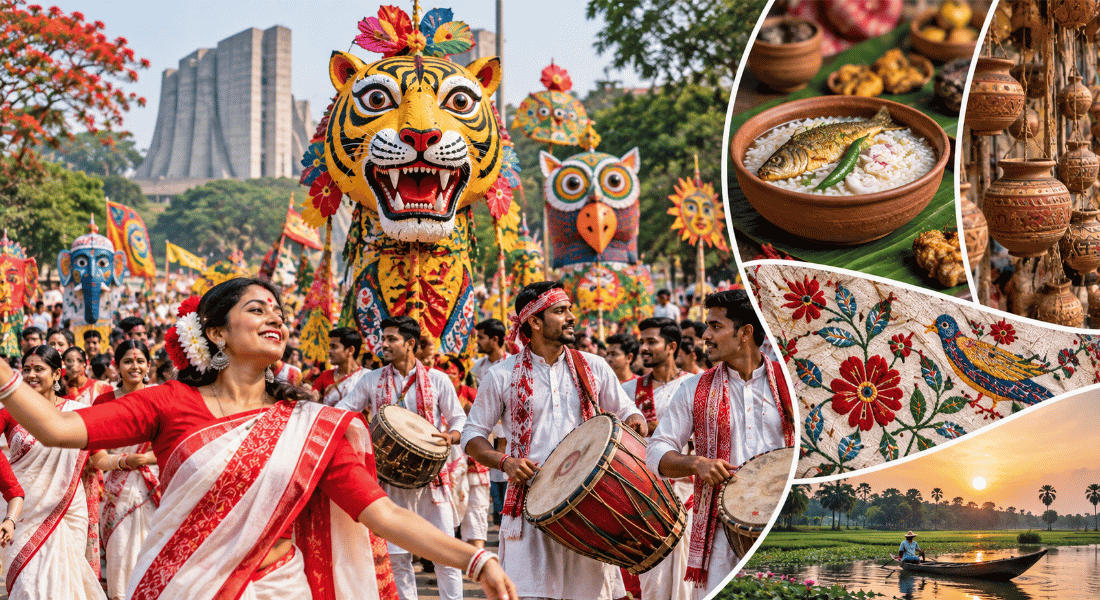
The Mangal Shobhajatra procession features enormous colorful masks, intricate papier-mâché sculptures, and artistic floats that represent diverse themes—from mythological narratives to contemporary social messages. Participants, dressed in traditional Bengali attire or artistic costumes, march through the streets accompanied by traditional drums, folk music, and celebratory chants of "Pohela Boishakhi Shubhechha" (Happy Bangla New Year).
The procession typically begins in the early morning and winds through major streets and landmarks, drawing hundreds of thousands of spectators. It is characterized by its spontaneous creativity, where families, students, cultural groups, and artists contribute their own artistic expressions. Each mask and float tells a story, whether celebrating nature, addressing social issues, or reviving ancient folklore.
Symbolism Behind the Masks and Procession
The masks and figures in Mangal Shobhajatra carry deep symbolic meaning. The tiger masks, for instance, represent courage and national pride—the Bengal tiger is an important symbol in Bengali culture and appears on the national emblem of Bangladesh. Serpent motifs represent the cosmic and the eternal, while floral designs celebrate the renewal of spring and nature's beauty.
Many Mangal Shobhajatra masks draw from ancient Baul traditions, tribal folklore, and Hindu-Buddhist artistic heritage, reflecting the syncretic cultural traditions of Bengal. The procession itself, with its emphasis on collective participation and artistic expression, embodies the democratic and inclusive spirit of Bengali culture.
The colors used in Mangal Shobhajatra are deliberately vibrant and bold—yellows, reds, greens, blues—representing the colorfulness of life and the rejection of dullness or monotony. The use of natural materials like bamboo, clay, and paper reflects a connection to traditional craftsmanship and environmental consciousness.
UNESCO Intangible Cultural Heritage Recognition
In 2016, UNESCO officially recognized Mangal Shobhajatra as a Masterpiece of the Oral and Intangible Heritage of Humanity. This prestigious recognition acknowledged the procession as a globally significant cultural tradition representing humanity's diverse heritage.
The UNESCO recognition highlighted how Mangal Shobhajatra embodies universal values of human creativity, cultural diversity, and peaceful celebration. It recognized the procession as not merely a festival but a living tradition that continuously evolves while maintaining connection to its cultural roots.
This UNESCO Intangible Cultural Heritage designation elevated Mangal Shobhajatra to global prominence and emphasized Bangladesh's responsibility to preserve, protect, and transmit this cultural tradition to future generations. The recognition also enhanced cultural tourism opportunities, as travelers from around the world increasingly seek to experience authentic cultural heritage celebrations.
Traditional New Year Customs and Celebrations
Traditional Clothing and Colors
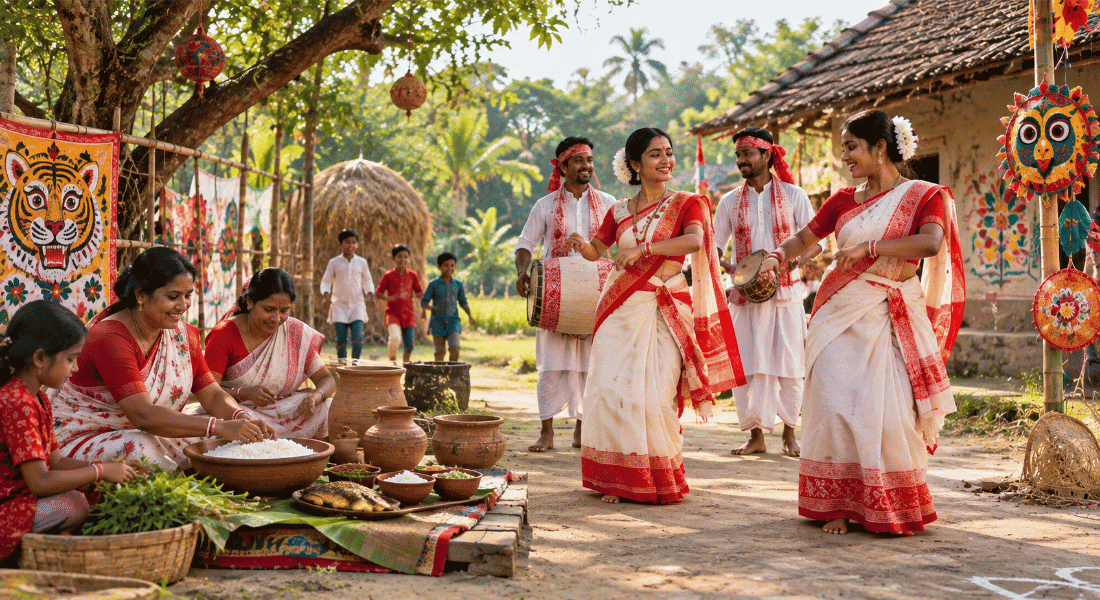
Pahela Baishakh celebrations are distinguished by a conscious return to traditional Bengali attire. Women traditionally wear colorful Sarees in bright hues—predominantly red and white or yellow and white, reflecting traditional patterns and colors associated with spring and prosperity. The designs often feature traditional Bengali motifs like the Jamdani weave or block-printed patterns.
Men typically wear traditional Dhoti and Panjabi, often in white or cream colors, sometimes paired with a traditional Lungi. The color white in traditional Bengali attire symbolizes purity and simplicity, while the bright colors of women's garments celebrate the vibrancy of life.
Young people increasingly blend traditional and modern fashion, creating innovative fusion styles that honor tradition while expressing contemporary identity. This evolution reflects how Pahela Baishakh remains a living tradition, continuously adapting while maintaining its cultural essence.
Beyond clothing, the colors of Pahela Baishakh—vibrant yellows, reds, greens, and blues—appear everywhere: in flower garlands, decorative flags, painted walls, and artistic installations across cities and villages.
Songs, Dance, and Cultural Events
Music and dance are the lifeblood of Pahela Baishakh celebrations. Traditional Bengali folk songs, particularly Baul music, form the soundtrack of the festival. Baul singers—wandering minstrels with deep spiritual traditions—perform in public spaces, their soulful renditions celebrating love, nature, and social justice.
Jatra (Bengali folk theater), Kathak (classical Indian dance), and Manipuri dance performances are organized throughout the country during Pahela Baishakh. These performances showcase centuries-old artistic traditions that have been refined and transmitted through generations.
Modern cultural organizations also stage contemporary performances that blend classical traditions with modern themes, ensuring that Bengali cultural expression remains dynamic and relevant to contemporary audiences.
In educational institutions, youth participate in cultural competitions, drama productions, and musical performances celebrating Bengali heritage. These activities serve both as entertainment and as a conscious effort to transmit cultural knowledge to younger generations.
Community Gatherings and Family Traditions
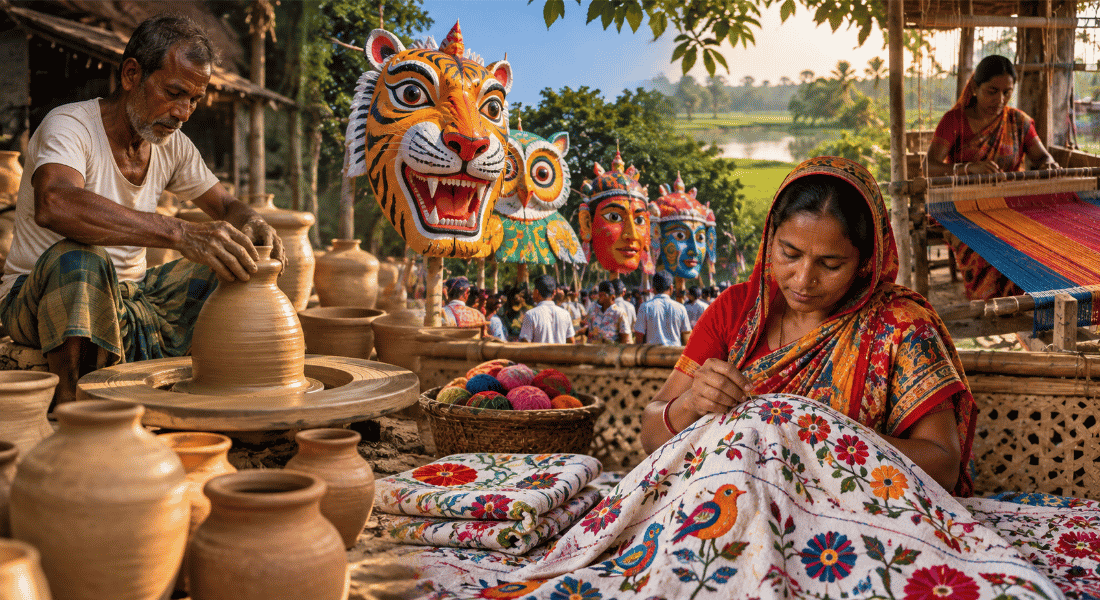
Pahela Baishakh is fundamentally a day of community gathering. In villages, it is marked by community fairs (known as Baishakhi Melas) where people gather for food, entertainment, shopping, and socializing. These fairs often feature traditional games, folk performances, and the sale of traditional handicrafts.
Families gather for special meals, and it is common for people to visit relatives and friends, exchanging greetings and good wishes for the coming year. The tradition of exchanging "Pohela Boishakhi" cards—similar to greeting cards—has become increasingly popular.
Elderly family members often bless younger generations on Pahela Baishakh, and the day is considered auspicious for beginning new ventures or making important decisions. Families also often pay respects to ancestors and seek blessings for prosperity in the coming year.
Traditional Foods of Pahela Baishakh
Panta Ilish and Its Cultural Significance
Panta Ilish is perhaps the most iconic traditional food associated with Pahela Baishakh, particularly in Bangladesh. Panta is rice left soaked overnight in water, served with fried or curried fish (Ilish—the national fish of Bangladesh—is traditionally used).
This humble dish holds profound cultural significance. It represents the agricultural heritage of Bengal, as the practice of soaking rice dates back to ancient farming traditions when families would prepare food simply using basic ingredients. Panta Ilish connects Pahela Baishakh celebrations to the land, the harvest, and the sustenance of rural communities.
The tradition of eating Panta Ilish on Pahela Baishakh transcends class boundaries. Whether in villages or cities, rich or poor, people eat this dish as a conscious act of cultural connection and humility. It symbolizes the belief that prosperity and celebration should not distance us from our roots or from simple, honest sustenance.
Traditional Bengali Sweets
Bengali cuisine is famous for its sweets, and Pahela Baishakh is a time when traditional Bengali confections feature prominently. Kheer (rice pudding), Rosogolla (soft cheese sweets in syrup), Sandesh (soft cheese confection), and Payesh (rice and lentil dessert) are among the traditional sweets prepared for the festival.
These sweets are often made in homes, and the preparation itself is a form of cultural transmission, as recipes and techniques are passed down from one generation to the next. The sharing of homemade sweets is also a way to strengthen community bonds and express goodwill.
Regional Food Traditions
Different regions of Bangladesh have their own traditional foods associated with Pahela Baishakh. In Chittagong, traditional foods include Bhune Khichuri (rice cooked with vegetables and spices). In Sylhet, traditional preparations often include fish curries and bamboo shoot dishes unique to the region.
Rural areas often prepare special dishes using seasonal vegetables and newly harvested crops, connecting the food traditions directly to the agricultural calendar. This regional diversity in food traditions reflects the cultural heterogeneity of Bengal while maintaining the common thread of celebrating the new year through food.
How Pahela Baishakh Is Celebrated Across Bangladesh
Celebrations in Dhaka
Dhaka, the capital city, hosts the most elaborate and widely recognized Pahela Baishakh celebrations. The Mangal Shobhajatra procession, which departs from Dhaka University in the early morning, is the centerpiece of celebrations in the capital.
Thousands of people gather to participate in and witness the procession, which winds through major streets including Nilkhet, the old city, and various historical landmarks. The streets are decorated with flags, banners, and artistic installations. Major cultural programs are organized in various venues, including the Bangladesh Shilpakala Academy (National Academy of Arts).
Street fairs and markets come alive with vendors selling flowers, traditional handicrafts, clothes, and food items. The atmosphere is electric, with music, laughter, and the constant hum of human celebration filling the air.
Village Festivals and Rural Traditions
While Dhaka's celebrations attract international attention, the heart of Pahela Baishakh often lies in the villages and smaller towns of Bangladesh. In rural areas, the festival manifests in different forms—often more intimate and deeply rooted in community traditions.
Village fairs (Baishakhi Melas) remain central to rural celebrations. These fairs bring together people from surrounding areas for commerce, entertainment, and cultural exchange. Traditional performances, folk music, and simple celebrations characterize village Pahela Baishakh.
In many villages, Pahela Baishakh is also associated with agricultural cycles, and the day may include ceremonies or celebrations related to farming and harvest preparation. This deep connection between the festival and agricultural life remains particularly strong in rural Bengal.
Local Cultural Experiences for Visitors
For travelers seeking authentic cultural immersion, experiencing Pahela Baishakh through community-based tourism offers unparalleled opportunities. Platforms like Otithi—BRAC's community-based tourism initiative—connect visitors with local communities during cultural celebrations.
Through Otithi's curated packages and experiences, visitors can:
Stay with Local Families: Experience Pahela Baishakh as a guest in a Bengali home, participate in family preparations and celebrations
Learn Traditional Arts: Work with local artisans to create Mangal Shobhajatra masks and participate in the procession
Witness Village Celebrations: Experience authentic Baishakhi Melas and community gatherings in rural settings
Participate in Food Traditions: Learn to prepare traditional Pahela Baishakh foods from experienced community members
This approach to cultural tourism ensures that travelers contribute directly to local economies while gaining deep, meaningful cultural insights. To explore such opportunities, visit Otithi's platform and learn more about their community-based tourism model.
Why Pahela Baishakh Matters Today
Preserving Bengali Cultural Heritage
In an increasingly globalized world where cultural homogenization threatens traditional practices, Pahela Baishakh serves as an active defense and celebration of Bengali cultural heritage. The festival keeps alive centuries-old traditions in music, art, food, and language that might otherwise fade.
The annual celebration of Pahela Baishakh ensures that younger generations are exposed to and engaged with cultural traditions, creating continuity between past and present. Educational institutions, cultural organizations, and families collectively work to preserve and transmit knowledge about Bengali New Year customs and traditions.
UNESCO's recognition of Mangal Shobhajatra provides international validation of the importance of cultural heritage preservation, elevating Bengali traditions on the global stage and creating frameworks for protection and transmission of these traditions.
Strengthening National Identity
For Bangladesh, Pahela Baishakh holds particular significance as a festival that transcends religious and ethnic boundaries. In a nation with Muslim, Hindu, Buddhist, and Christian populations, the celebration of Bangla Noboborsho is secular and inclusive, representing a shared cultural identity that unites diverse communities.
The festival reinforces Bangladeshi national identity distinct from the broader South Asian context. It celebrates specifically Bengali language, traditions, and cultural expressions, which is particularly important given Bangladesh's distinct history and sovereignty.
After the independence movement and subsequent nation-building, Pahela Baishakh became a symbol of cultural autonomy and national pride. The festival affirms that Bengali culture is not a subset of broader Indian culture but a distinct and valuable civilization worthy of celebration and protection.
Cultural Tourism and Sustainable Community Development
Pahela Baishakh has increasingly become a driver of cultural tourism, attracting visitors from around the world who seek authentic experiences beyond conventional tourism. This tourism can provide economic benefits to communities when managed responsibly.
Sustainable, community-based tourism approaches—such as those promoted by Otithi—ensure that cultural tourism benefits directly support local communities. When visitors engage with local artisans, stay in community homes, and learn from community members, the economic value of cultural celebration flows directly to those preserving the traditions.
This creates a virtuous cycle where cultural tourism provides economic incentives for tradition preservation, ensuring that older generations continue to pass knowledge to younger ones, and that traditional arts and crafts remain economically viable.
Frequently Asked Questions About Pahela Baishakh
Q: What exactly is Pahela Baishakh? A: Pahela Baishakh is the first day of the Bengali calendar, celebrated on April 14th or 15th each year. It marks the Bengali New Year (Bangla Noboborsho) and is celebrated as a major cultural festival in Bangladesh and among Bengali-speaking communities worldwide. The day is characterized by colorful processions, traditional music and dance, family gatherings, and the eating of traditional foods.
Q: Why is Mangal Shobhajatra important? A: Mangal Shobhajatra, the auspicious procession featuring elaborate masks and artistic floats, has become the most iconic visual representation of Pahela Baishakh. It is important because it serves as a living artistic expression of Bengali culture, combining traditional art forms with contemporary social commentary. UNESCO's recognition of it as Intangible Cultural Heritage of Humanity underscores its global significance as a celebration of human creativity and cultural diversity.
Q: When is Pahela Baishakh celebrated, and why that date? A: Pahela Baishakh is celebrated on the 14th or 15th of April each year. This date aligns with the spring season in the Northern Hemisphere and marks the beginning of the agricultural season in Bengal. The date was determined through ancient astronomical calculations and refined during Emperor Akbar's calendar reform in 1584 CE.
Q: Why is Mangal Shobhajatra recognized by UNESCO? A: In 2016, UNESCO recognized Mangal Shobhajatra as a Masterpiece of the Oral and Intangible Heritage of Humanity because it represents universal values of human creativity, cultural diversity, and peaceful celebration. The procession exemplifies how traditional art forms can continuously evolve while maintaining connection to cultural roots, making it a globally significant cultural expression.
Q: What foods are traditionally eaten during Pahela Baishakh? A: Panta Ilish (soaked rice with fried fish) is the most iconic traditional food, symbolizing connection to agricultural heritage. Other traditional foods include Bengali sweets like Rosogolla, Sandesh, and Payesh, along with regional specialties. The sharing and preparation of these foods is an important part of cultural transmission and family bonding during the festival.
Conclusion
Pahela Baishakh stands as one of the world's most vibrant and meaningful cultural celebrations, a festival where millions of people consciously reconnect with heritage, community, and identity. From its origins in ancient astronomical traditions refined by Emperor Akbar, to its evolution into the spectacular Mangal Shobhajatra procession recognized globally by UNESCO, the Bengali New Year represents a living bridge between past and present.
The festival's importance transcends its status as a date on the calendar. Pahela Baishakh is a day when cultural values are reaffirmed, when communities strengthen bonds, when artists showcase their creativity, and when Bengalis worldwide celebrate what it means to belong to a culture with centuries-old traditions.
As Bangladesh and the global Bengali diaspora continue to celebrate Pahela Baishakh with increasing enthusiasm and creativity, the festival remains a powerful force for cultural preservation, community empowerment, and national identity. In an era of rapid globalization, Pahela Baishakh reminds us of the value of cultural continuity and the human need to celebrate identity and community.
For those seeking to experience Pahela Baishakh authentically, community-based tourism platforms provide unprecedented opportunities to engage directly with celebrations, learn from tradition-bearers, and contribute meaningfully to communities. Whether you're drawn by the artistic spectacle of Mangal Shobhajatra, the spiritual significance of renewed traditions, or the human warmth of community celebration, Pahela Baishakh offers an unforgettable immersion into the heart of Bengali culture.