Blog
29
Jul
Things To See In Old Dhaka
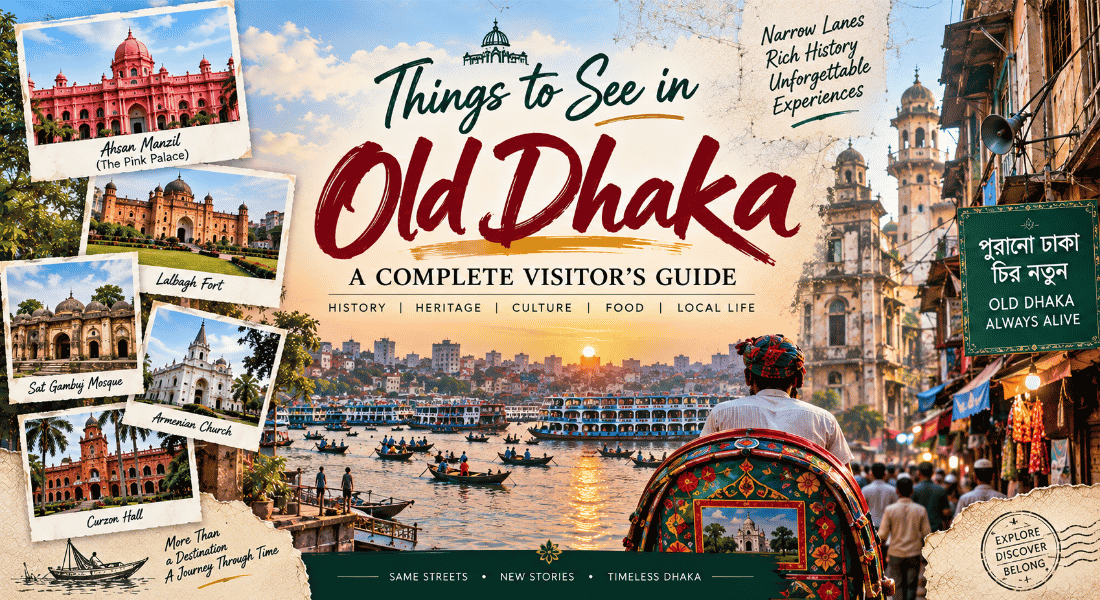
Things to See in Old Dhaka: A Complete Visitor's Guide
The narrow lanes of Old Dhaka are like a living museum. Every corner reveals something unexpected – a crumbling Mughal gate, a colonial-era mansion, a bustling market, or a hidden temple. The city's history is written in its buildings and streets.
But with so much to see, it can be overwhelming. Where do you start? What's worth your time? This guide covers the essential things to see in Old Dhaka, organized by category so you can plan your visit efficiently.
Mughal-Era Landmarks
Lalbagh Fort
Lalbagh Fort is Old Dhaka's most important Mughal monument. Construction began in 1678 under Prince Muhammad Azam, but the fort was never completed. Despite this, what remains is impressive.
What you'll see:
The three-domed mosque, still in active use
The Diwan-i-Aam (Hall of Public Audience)
The tomb of Pari Bibi with its beautiful marble
The impressive fort walls and gateways
The uncompleted structures that tell a story of ambition
Why it matters: Lalbagh Fort represents the ambition of Mughal architecture in Bengal. It's Dhaka's most important Mughal monument.
Time needed: 1.5–2 hours
Location: In the heart of Old Dhaka, near the Buriganga River
Best time to visit: Morning (9–11 AM) for cooler weather
For more Mughal heritage sites, check our guide on best heritage sites in Old Dhaka.
Bara Katra
Bara Katra was built around 1644 as a caravanserai – a rest stop for merchants traveling the trade routes of Bengal. It was one of the most important commercial buildings of Mughal Dhaka.
What you'll see:
The impressive gateway with its Mughal-style arches
The courtyard that once hosted hundreds of travelers
The thick walls and protective fortifications
The bustling neighborhood that has grown around it
Why it matters: Bara Katra was the center of Dhaka's commercial life during the Mughal period.
Time needed: 20–30 minutes
Location: Chawkbazar area
Note: The building is in disrepair but its historical value is still evident.
Choto Katra
Built in 1664, Choto Katra was the second major caravanserai in Old Dhaka. It was smaller than Bara Katra but served a similar purpose.
What you'll see:
The gateways and arches
The courtyard
The views over the surrounding neighborhood
Why it matters: Together with Bara Katra, Choto Katra shows the scale of trade that passed through Mughal Dhaka.
Time needed: 20–30 minutes
Location: Near Bara Katra, Chawkbazar area
Sat Gambuj Mosque
The Sat Gambuj Mosque (Seven Domed Mosque) is one of Dhaka's oldest Mughal mosques. It was built in the 17th century and takes its name from its seven domes.
What you'll see:
The seven domes (gambuj)
The Mughal-era design
The peaceful atmosphere
Why it matters: It's one of the few remaining Mughal mosques in Dhaka.
Time needed: 15–20 minutes
Location: Within the old fort area of Dhaka
Khan Mohammad Mridha Mosque
This mosque was built in 1705 during the Mughal period. It's a lesser-known heritage site but a beautiful example of Mughal architecture.
What you'll see:
The single dome
The Mughal-era design
The peaceful setting
Why it matters: It's one of the few surviving Mughal mosques in Old Dhaka.
Time needed: 15–20 minutes
Location: Lalbagh area
Colonial-Era Buildings
Ahsan Manzil (The Pink Palace)
Ahsan Manzil is Dhaka's most iconic colonial-era building. Built in 1872, it was the official residence of the Dhaka Nawab family. The pink color is striking, and the palace is a symbol of Dhaka's wealthy landed aristocracy.
What you'll see:
The grand Durbar Hall with its European chandeliers
The Nawab's private quarters
The beautifully restored interior
The museum displaying artifacts from the British period
The gardens overlooking the Buriganga River
Why it matters: Ahsan Manzil is the most recognizable historical building in Dhaka. It hosted many important political discussions during the British period.
Time needed: 1.5–2 hours
Opening hours: 10 AM–5 PM (closed Thursday)
Entry fee: Approximately 300 BDT (foreigners)
Location: Kumartoli, on the banks of the Buriganga River
Best time to visit: Morning for the best light
For more colonial heritage, check our guide on best historical places in Dhaka.
The Armenian Church
The Armenian Church is one of the oldest Christian structures in Bangladesh. It was built in 1781 by the Armenian community that once had a significant presence in Dhaka.
What you'll see:
The distinctive architecture, including the spire
The historical graveyard with Armenian inscriptions
The peaceful interior
The beautiful stained glass
Why it matters: The church is a reminder of Dhaka's multicultural past. Armenians were important merchants and traders in 18th and 19th century Dhaka.
Time needed: 30–45 minutes
Location: Armenian Street, Old Dhaka
Best time to visit: Morning for the most peaceful atmosphere
Curzon Hall
Curzon Hall is one of Dhaka's most beautiful British-era buildings. Built in 1904, it was named after Lord Curzon, the then Viceroy of India. Today, it's part of the University of Dhaka.
What you'll see:
The striking red-brick architecture with European and Mughal influences
The grand central hall
The symmetrical wings
The gardens and campus setting
Why it matters: Curzon Hall is a symbol of British-era education in Bengal. It's also where many of the discussions that led to the 1971 independence movement took place.
Time needed: 30–45 minutes
Location: University of Dhaka campus
Best time to visit: Morning or late afternoon for the best light
Ruplal House
Ruplal House is a stunning example of colonial-era architecture on the banks of the Buriganga. It was built in the 19th century and reflects the wealth of Dhaka's merchant class.
What you'll see:
The grand facade facing the river
The architectural details of the entrance
The view over the Buriganga
Why it matters: Ruplal House shows the affluence of Dhaka's trading community during the British period.
Time needed: 15–20 minutes
Location: On the banks of the Buriganga River
Note: The building is partially in disrepair but remains impressive.
Nawab's Land
This area in Old Dhaka contains several buildings associated with the Nawabs of Dhaka. The area was the center of the city's political and social life during the Nawabi period.
What you'll see:
The old Nawab buildings
The historic lanes
The atmosphere of old Dhaka
Why it matters: The Nawabs of Dhaka were among the most powerful families in Bengal.
Time needed: 30–45 minutes
Location: Old Dhaka, near Ahsan Manzil
Religious Sites
Dhakeshwari Temple
Dhakeshwari Temple is the national temple of Bangladesh. While the current structure dates from the British period, the site has been used for Hindu worship for centuries.
What you'll see:
The main temple complex
The goddess Durga as the presiding deity
The surrounding temple structures
The courtyard and gardens
Why it matters: This is the most important Hindu temple in Bangladesh. It's also where the country's most significant Durga Puja celebrations take place.
Time needed: 45 minutes–1 hour
Location: Central Dhaka, near the University
Tara Masjid (Star Mosque)
The Star Mosque is a unique structure in Old Dhaka. It features star-shaped decorations on its exterior and interior, giving it its name.
What you'll see:
The star-shaped tile work
The beautiful interior design
The peaceful atmosphere
Why it matters: The mosque is known for its unique decorative elements. It's one of the most photographed mosques in Dhaka.
Time needed: 15–20 minutes
Location: Armanitola, Old Dhaka
Binat Bibi Mosque
This is one of the oldest mosques in Dhaka, built in the 17th century. It's a small but historically significant structure.
What you'll see:
The simple design
The historic atmosphere
The quiet setting
Why it matters: It's one of the earliest mosques built in Dhaka.
Time needed: 10–15 minutes
Location: Old Dhaka area
Banani Shia Mosque
While not in Old Dhaka, this is an important religious site worth noting for those interested in Islamic architecture.
Time needed: 20–30 minutes
Location: Banani, Dhaka
The Riverfront and Streets
Sadarghat Riverfront
Sadarghat is the heart of Old Dhaka. The riverfront is where the Buriganga comes alive with boats, barges, and ferries.
What you'll see:
The busy boat traffic on the river
The old buildings along the waterfront
The daily life of the river community
The spectacular sunsets
Why it matters: Sadarghat has been Dhaka's river port for centuries. It's where the city's trade began.
Time needed: 1 hour for walking and watching
Location: On the banks of the Buriganga River
Best time to visit: Morning for the busy activity, evening for the sunset
Chawkbazar
Chawkbazar is the commercial heart of Old Dhaka. The market is filled with shops, stalls, and street vendors.
What you'll see:
The bustling market atmosphere
Traditional shops and stalls
The local community going about their business
The mix of old and new buildings
Why it matters: Chawkbazar has been the center of trade in Old Dhaka for centuries.
Time needed: 1–2 hours for exploring
Location: The main market area of Old Dhaka
Shankhari Bazaar
Shankhari Bazaar is famous for traditional Bengali crafts and jewelry. It's also one of the most historic areas of Old Dhaka.
What you'll see:
Traditional craft shops
Bengali jewelry
The historic atmosphere
Why it matters: Shankhari Bazaar preserves Dhaka's traditional craft heritage.
Time needed: 30–45 minutes
Location: Old Dhaka area
Walking Through Old Dhaka's Lanes
The Hidden Gems
Beyond the major monuments, Old Dhaka's lanes are full of discoveries. Here's what to look for:
Historical buildings: Many old buildings are tucked away in the lanes. Some are in good condition, others in disrepair.
Street life: The lanes are alive with activity – children playing, shops selling everything, and community life unfolding.
Old architecture: Look for the details – arches, windows, and decorations that show the craftsmanship of the past.
Local temples and shrines: Many small temples are hidden in the lanes, often marked by small statues or decorated entrances.
Food stalls: Every lane has its own food specialties – a chance to taste authentic Old Dhaka cuisine.
Suggested Walking Route
The Complete Old Dhaka Heritage Walk
This route covers the major sites in Old Dhaka:
Start at Lalbagh Fort (morning, 9 AM)
Walk to Sat Gambuj Mosque (15 minutes)
Continue to Khan Mohammad Mridha Mosque (10 minutes)
Walk to the Armenian Church (20 minutes)
Continue to Bara Katra and Choto Katra (20 minutes)
Walk to Sadarghat riverfront (15 minutes)
Cross to Ahsan Manzil (via boat or walk around)
Walk to Curzon Hall (30 minutes)
End at Dhakeshwari Temple (10 minutes)
Distance: Approximately 4 kilometers
Time: 6–8 hours, depending on how long you spend at each site
Best time to start: 9 AM
Food Stops Along the Way
Breakfast
At Lalbagh: Try local breakfast snacks from nearby street stalls.
Lunch
Near Chawkbazar: Visit Haji Biryani for the legendary Old Dhaka biryani. Expect a queue.
Tea Break
Near Sadarghat: Stop at a local tea stall for a cup of traditional Bangladeshi tea.
Evening Snacks
At Chawkbazar: Try nimki, jilipi, and other traditional snacks from street vendors.
For more on Old Dhaka's food culture, check our guide on old Dhaka heritage travel guide.
Photography Tips
General Photography Tips
Respect privacy: Ask permission before photographing people
Be discreet: In crowded areas, use a small camera or phone
Look for details: The doors, windows, and decorations are often beautiful
Capture the atmosphere: The chaos and energy are part of the experience
Go early: The light is better and the crowds are smaller
Practical Information
Getting Around
Walking: The best way to explore. The lanes are narrow and full of discoveries.
Rickshaw: Perfect for short hops between sites. Agree on the fare before you start.
Boat: For crossing the river or enjoying the riverfront view.
What to Wear
Comfortable walking shoes
Modest clothing for religious sites
Light, breathable fabrics
A hat and sunscreen
What to Bring
Cash (most shops don't accept cards)
Camera
Water bottle
Hand sanitizer
Map or phone with GPS
Safety Tips
Keep valuables secure
Stay on main streets in the evening
Take a rickshaw at night rather than walking alone
Drink bottled water only
Follow local advice
Conclusion
Old Dhaka offers an incredible array of things to see. From the Mughal grandeur of Lalbagh Fort to the colonial elegance of Ahsan Manzil, from the peaceful Armenian Church to the vibrant streets of Chawkbazar, every site tells a story.
Don't miss:
Lalbagh Fort – Dhaka's most important Mughal monument
Ahsan Manzil – The iconic Pink Palace
The Armenian Church – A reminder of multicultural Dhaka
Sadarghat – The living heart of Old Dhaka
The lanes of Old Dhaka – For the authentic experience
Chawkbazar – For the market atmosphere
Exploring Old Dhaka requires patience and curiosity. The heat, the crowds, and the narrow lanes can be challenging. But the rewards are immense. You'll leave with a deeper understanding of Bangladesh's capital and its people.
For more on Old Dhaka's history, check our guide on history of Old Dhaka.
FAQ Questions
1. What are the must-see sites in Old Dhaka?
The must-see sites are Lalbagh Fort, Ahsan Manzil (Pink Palace), the Armenian Church, Sadarghat riverfront, Bara Katra, Choto Katra, Curzon Hall, and Dhakeshwari Temple.
2. How much time do I need to see Old Dhaka?
A full day (6–8 hours) is enough to see the major sites. For a deeper exploration, allow 2 days.
3. What is the best way to get around Old Dhaka?
Walking is the best way to explore. Rickshaws are useful for short hops. Private cars are not practical in the narrow lanes.
4. When is the best time to visit Old Dhaka?
October to March offers the most comfortable weather. Morning visits (7–10 AM) are best for avoiding the heat and crowds.
5. Is Old Dhaka safe for tourists?
Yes, but exercise normal safety precautions. Keep valuables secure, stay aware of your surroundings, and avoid walking alone at night.
6. What should I wear in Old Dhaka?
Dress modestly, especially for religious sites. Comfortable walking shoes are essential. Light, breathable fabrics are best for the heat.
7. Can I eat street food in Old Dhaka?
Yes, but choose food that's freshly cooked and places with high turnover. Avoid food that has been sitting out. Drink bottled water only.
8. What is the most photographed spot in Old Dhaka?
Ahsan Manzil (The Pink Palace) is the most photographed building. Sadarghat at sunset is also extremely popular.
Ready to explore the rich history and vibrant culture of Old Dhaka? Explore Otithi's heritage tours and cultural experiences for an authentic journey through Bangladesh's most historic neighborhoods.