Blog
10
Jul
Top Tourist Places In Sylhet
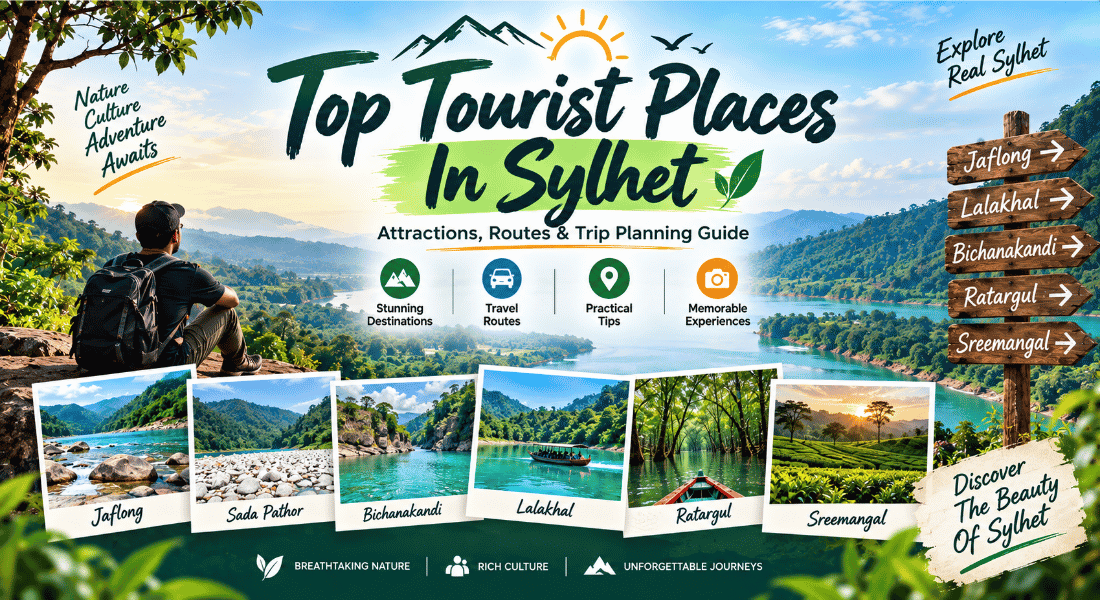
Top 20 Tourist Places in Sylhet: Attractions, Routes & Trip Planning Guide
Sylhet isn't just Bangladesh's tea capital. It's a region where the landscape dramatically shifts from rolling green hills to winding rivers, and where the culture feels distinctively its own. If you're planning a trip, the sheer number of places to visit can feel overwhelming. Where do you actually start?
Let's cut through the confusion. This guide covers the top tourist places in Sylhet, how to get between them, and practical advice for planning a trip that matches your time and interests.
The Sylhet Experience: More Than Tea Gardens
Sylhet's popularity is well-earned. The region offers a mix of natural beauty, cultural heritage, and adventure that few other parts of Bangladesh can match.
What makes Sylhet special? It's the combination of:
Unique landscapes – The famous "Sada Pathor" (white stones) of Jaflong, the crystal-clear waters of Lalakhal, and the floating forest of Ratargul.
Tea culture – Endless stretches of tea gardens, particularly around Sreemangal.
Waterways – Rivers like the Surma and Piyain that shape daily life and create stunning scenery.
Living heritage – Indigenous communities like the Khasia, whose traditions are woven into the region's identity.
Visitors generally split their time between the greater Sylhet city area (Jaflong, Bichanakandi, Lalakhal) and the Sreemangal region (tea gardens, Lawachara rainforest). You'll need to plan your transport accordingly.
Top Attractions in Sylhet
Here's a breakdown of the best places to visit. Think of this as your starting point – once you know what interests you, you can build an itinerary around it.
Jaflong
Jaflong sits right on the Bangladesh–India border, about 60 kilometers from Sylhet city. It's famous for the Dawki River, which brings stones down from the hills of Meghalaya. Visitors can walk along the riverbank, watching the stone collection process and taking in the views of the Khasi hills.
The boat ride on the Dawki River is the main draw. The water is often clear enough to see the riverbed, and the surrounding hills make for incredible photographs.
Sada Pathor
Sada Pathor (White Stone) is essentially the same area as Jaflong – the name refers specifically to the white stone collection point. In practice, travelers use the names interchangeably. If you're visiting Jaflong, you'll see Sada Pathor along the same stretch of river.
Bichanakandi
Located in the Gowainghat upazila, Bichanakandi is often described as a hidden gem. It's on the banks of the Piyain River, with distinctive stone formations and hills that create a dramatic landscape.
Bichanakandi offers boat trips through rocky river channels. The scenery is particularly striking during the monsoon season when the water levels rise and the hills become even greener.
Lalakhal
Lalakhal is another river destination, famous for its unusually clear blue-green water. It's part of the Jaintia hills area, about 60 kilometers from Sylhet city.
Visitors take boat rides on the river, with the landscape changing from open water to narrow channels between hills. The water colour varies throughout the year – it's often at its most vivid during the winter months.
Ratargul Swamp Forest
Ratargul is one of Bangladesh's only freshwater swamp forests. It's about 26 kilometers from Sylhet city and covers roughly 1,400 acres.
The forest is submerged during the monsoon season, creating an almost Amazon-like atmosphere. You can take a boat through the flooded forest, gliding past submerged trees with their branches reaching over the water. The best time to visit is between July and September, when the water levels are highest.
Sreemangal
Often called the "tea capital" of Bangladesh, Sreemangal is a separate district but it's almost always included in a Sylhet trip. The town is surrounded by tea gardens that stretch as far as the eye can see.
Beyond the tea gardens, Sreemangal is also home to:
Lawachara National Park – a tropical rainforest with rare wildlife
The Khasia villages – indigenous communities living in the hills
Madhabpur Lake – a lake surrounded by tea gardens and hills
The Baikka Beel – an important wetland for bird watching
Sylhet City
Sylhet city itself has a few worthwhile attractions:
Hazrat Shah Jalal's shrine – one of Bangladesh's most important Islamic sites
Hazrat Shah Paran's shrine – another significant shrine near the city
Keane Bridge – a historic bridge over the Surma River
Museum of Sylhet – for local history and artifacts
How to Plan Your Sylhet Trip
Getting to Sylhet
By air: Flights from Dhaka to Sylhet take about 45 minutes. Multiple airlines operate daily flights. This is the fastest option and works well if you're short on time.
By bus: Several companies run overnight and daytime buses from Dhaka to Sylhet. The journey takes around 5–7 hours, depending on traffic. It's a budget-friendly option.
By train: Trains from Dhaka to Sylhet take about 6–8 hours. The route passes through scenic countryside, offering a more relaxed travel experience.
Getting Around Sylhet
Once you're in Sylhet, you'll need transport to reach the attractions. The options include:
CNG auto-rickshaws: These are everywhere in the city and are fine for short trips within Sylhet.
Car rental: For visiting multiple destinations, hiring a car with a driver is the most practical option. Our detailed guide on car rental in Sylhet covers the costs and options in depth.
Bus: Local buses connect Sylhet city to major towns like Sreemangal and Gowainghat, but they're slow and can be crowded.
Travel Time Between Destinations
Sylhet city to Jaflong/Sada Pathor: Approximately 2 hours
Sylhet city to Bichanakandi: Around 2.5–3 hours
Sylhet city to Lalakhal: About 1.5–2 hours
Sylhet city to Ratargul: Roughly 1 hour
Sylhet city to Sreemangal: Around 2.5 hours
Jaflong to Sada Pathor: These are the same area – travel time is negligible
Best Time to Visit Sylhet
The ideal time to visit Sylhet is between October and March. The weather is cooler and drier, making it comfortable for sightseeing.
From April to June, temperatures rise significantly. July to September brings the monsoon, with heavy rain that can cause road disruptions. However, the monsoon also makes places like Ratargul Swamp Forest particularly spectacular.
For more details on seasonal planning, check out our complete guide on the best time to visit Sylhet.
Building Your Itinerary
The right itinerary depends on how much time you have.
2-Day Sylhet Itinerary
Day 1: Sylhet City and Surroundings
Start with the shrines of Hazrat Shah Jalal and Hazrat Shah Paran
Visit the Museum of Sylhet and Keane Bridge
Head towards Jaflong in the afternoon
Stay overnight near Jaflong or return to Sylhet city
Day 2: Jaflong and Bichanakandi
Morning boat ride in Jaflong
Visit Sada Pathor
Travel to Bichanakandi for a boat trip
Return to Sylhet city in the evening
3-Day Sylhet Itinerary
Day 1: Sylhet City
Explore the city's historical and cultural sites
Visit local markets for handicrafts and traditional food
Day 2: Jaflong, Sada Pathor and Bichanakandi
Full day exploring the Gowainghat area
Boat rides at Jaflong and Bichanakandi
Stay overnight near Bichanakandi or return to Sylhet
Day 3: Ratargul and Lalakhal
Morning trip to Ratargul Swamp Forest
Afternoon visit to Lalakhal
Return to Sylhet city for departure
5-Day Sylhet and Sreemangal Itinerary
Days 1–2: Follow the 2-day itinerary for Jaflong and Bichanakandi
Day 3: Travel to Sreemangal
Visit tea gardens and Lawachara National Park
Day 4: Sreemangal explorations
Visit Madhabpur Lake
Explore Khasia villages
Visit Baikka Beel for bird watching
Day 5: Return to Sylhet city with some flexibility for missed spots
For more detailed itinerary options, our Sylhet tour itinerary guide provides day-by-day planning.
Practical Travel Advice
Costs
Budget for your Sylhet trip based on your preferences:
Accommodation: Budget hotels start around 800–1,500 BDT per night. Mid-range hotels cost 2,000–4,000 BDT. Luxury options are available in the 5,000+ BDT range.
Transport: Car rental with driver typically costs 3,000–5,000 BDT per day. CNG rides within the city are 100–300 BDT per trip.
Boat rides: Boat fares vary by location. For a detailed breakdown of Lalakhal boat fares, check our specific guide.
Food: Local restaurants serve meals for 200–400 BDT. Higher-end restaurants in Sylhet city cost 500–1,000 BDT per person.
Our Sylhet tour package price guide gives a more comprehensive breakdown of costs for a complete trip.
What to Pack
Light cotton clothing for daytime
A light jacket or sweater for evenings (winter months only)
Comfortable walking shoes
Sunscreen and a hat
Mosquito repellent
A waterproof bag for electronics (especially during monsoon)
Cash – ATMs are available in Sylhet city but less common in rural areas
Food and Drink
Sylhet offers a distinct culinary culture:
Shatkora beef – a local beef curry flavoured with the shatkora fruit
Sylheti biryani – lighter than Dhaka biryani with a different spice mix
Local sweets – including different types of pitha (rice cakes)
Fresh tea – you're in tea country, so don't miss it
Responsible Travel
Sylhet's natural beauty is its biggest asset. Here are some simple ways to be a responsible traveler:
Don't litter – take your rubbish back with you, especially on boat trips
Respect local customs – dress modestly when visiting shrines
Support local communities – buy handicrafts directly from artisans
Choose eco-friendly activities – avoid anything that harms wildlife or the environment
Otithi Sylhet Experiences
For travelers who want a well-organised trip without the planning stress, Otithi by BRAC offers curated Sylhet experiences.
Our Sylhet tour packages connect you with the region's best attractions, accommodation, and local guides. You'll experience the real Sylhet – the tea gardens, the rivers, and the communities that make the region unique.
The packages include transport, carefully selected accommodation, and visits to key attractions. Whether you're looking for a quick 2-day getaway or a more in-depth exploration of the region, there's an option that fits your needs.
Conclusion
Sylhet is one of Bangladesh's most rewarding travel destinations. From the stone rivers of Jaflong to the tea gardens of Sreemangal, it offers experiences you won't find anywhere else in the country.
The key to a great Sylhet trip is planning around the time you have. With 2–3 days, focus on Jaflong, Bichanakandi and the area around Sylhet city. With 4–5 days, add Sreemangal to the mix.
The best time to visit is between October and March, when the weather is at its most comfortable. Whatever time of year you choose, Sylhet's landscapes, food and culture will leave a lasting impression.
FAQ Questions
1. What are the must-visit places in Sylhet?
The top attractions include Jaflong, Sada Pathor, Bichanakandi, Lalakhal, Ratargul Swamp Forest, and the tea gardens of Sreemangal.
2. How many days do I need for a Sylhet trip?
A 2–3 day trip covers the highlights around Sylhet city and Jaflong. A 5-day trip allows you to also explore Sreemangal and the surrounding tea garden region.
3. What is the best time to visit Sylhet?
October to March offers the most comfortable weather for sightseeing. The monsoon season (July–September) is best for Ratargul Swamp Forest.
4. Is it worth visiting both Jaflong and Bichanakandi?
Yes, if you have the time. Jaflong offers the famous stone river views, while Bichanakandi provides a more dramatic landscape with distinctive rock formations.
5. How do I travel from Sylhet city to Sreemangal?
The journey takes around 2.5 hours by road. Buses are available, or you can hire a private car for more flexibility.
6. What is the distance between Jaflong and Sada Pathor?
They are essentially the same area along the Dawki River. Travel time between them is minimal.