Blog
12
Jun
Sylhet Tea Garden Tour
Sylhet Tea Garden Tour: Plucking, Cha Bagan & Community Experience
Green hills roll out in every direction once you step into a Sylhet tea garden. The air smells different here, somewhere between wet grass and fresh leaf. A Sylhet tea garden tour gives you more than a photo stop. You walk the rows, try plucking a leaf yourself, and talk with the workers who've spent their whole lives on this land. If you've wondered what a real cha bagan visit looks like beyond the brochure photos, this guide walks you through it step by step.
MUST-KNOW FACT: Sylhet holds the oldest tea garden in the entire Indian subcontinent. Malnicherra Tea Estate started commercial production in 1857, and tea has shaped this region's economy and daily life ever since.
What Is a Sylhet Tea Garden Tour?
A Sylhet tea garden tour takes you into a working tea estate to see how tea actually gets made. You walk the plantation rows, watch or join the plucking process, and learn how leaves move from the bush to your cup. Most tours combine one estate visit with a nearby nature or river stop, since several gardens sit close to spots like Lalakhal and Ratargul.
Why Visit Sylhet Tea Gardens?
Sylhet tea gardens combine natural beauty with living history. You get rolling hills covered in bright green bushes, a direct look at British colonial agricultural heritage, and a chance to meet tea worker families who've lived on these estates for generations. Few places in Bangladesh let you see economy, culture, and landscape connect this clearly in one short visit.
Overview of Sylhet Tea Garden Tour
Sylhet sits in the northeast corner of Bangladesh, where hills rise just enough to drain water well but stay cool enough for tea bushes to thrive. The region holds well over a hundred tea estates, spread across the hill slopes around Sylhet city and stretching toward Srimangal in neighboring Moulvibazar district.
A typical Sylhet tea garden tour with Otithi starts close to the city, often at Malnichara Tea Estate, then moves toward the river and hill country near Lalakhal. You get two different sides of tea country in one trip: the historic estate near the airport, and the river-framed plantation views further out toward Jaintapur.
You don't need any prior knowledge of tea farming to enjoy this. A local guide walks you through each stage, from the bush to the factory floor, and most of what you learn sticks because you're seeing it happen in front of you, not reading it off a sign.
History of Tea Gardens in Sylhet
Tea didn't grow in Bangladesh by accident. The British East India Company wanted an alternative to China's tea monopoly, and after early tests in Assam succeeded during the 1830s, planters looked toward the hills of Sylhet for similar soil and climate.
Malnicherra Tea Estate became the answer. Workers planted the first bushes in the late 1840s, and the estate moved into full commercial production by 1857. That single garden marked the start of organized tea farming across the entire Indian subcontinent, not just Bangladesh.
Word spread fast once Malnicherra proved the soil could produce strong, exportable tea. Planters opened new estates across Sylhet's hill slopes through the second half of the 19th century, and the region grew into one of the most important tea-producing zones under British rule.
LOCAL INSIGHT: Many tea workers in Sylhet descend from families brought over from other parts of British India during the colonial period to work the original estates. Their communities still live on or near the gardens today, carrying customs and traditions distinct from the wider Sylheti population.
British Colonial Tea Legacy in Bangladesh
Walk through Malnicherra or any older estate and you'll spot the colonial fingerprints right away. Manager bungalows with wide verandas still sit at the edge of many gardens, surrounded by clipped lawns that look almost out of place against the wild green hills around them.
The British built more than gardens here. They set up the management structure, the labor system, and the export pipeline that still shapes how Bangladesh's tea industry runs today. After independence, ownership shifted into local and private hands, but the physical layout, the worker housing pattern, and even the plucking technique trace straight back to that colonial blueprint.
The Bangladesh Tea Board, the government body overseeing the industry today, grew directly out of this colonial-era foundation. It now regulates production standards and supports the estates that trace their roots back over 150 years.
This layered history is exactly why a tea garden visit works as both a nature trip and a heritage trip. You're not just looking at scenery. You're standing inside a system built more than a century and a half ago that still runs the way it always has.
Best Tea Gardens in Sylhet
Best Tea Gardens in Sylhet (Numbered List)
Malnicherra Tea Estate — the oldest and largest tea garden in the subcontinent, just minutes from Sylhet city.
Lalakhal Tea Gardens — plantation hills framed by the blue-green Sari-Goyain River.
Lakkatura Tea Estate — a large estate close to Sylhet city, easy to combine with a short city tour.
Tarapur Tea Garden — known locally for its proximity to Sylhet's residential areas, popular for evening walks.
Srimangal tea estates — a wider cluster of gardens in neighboring Moulvibazar, often called the tea capital of Bangladesh.
Tea Garden Comparison Table
PRO TIP: If you only have one day, pair Malnicherra with a quick stop at Lakkatura or Tarapur. If you have two or more days, add Srimangal for the full tea capital experience.
Malnichara Tea Estate Experience
Malnicherra Tea Estate, often written Malnichara, spreads across roughly 1,500 acres just minutes from Sylhet Osmani International Airport. This single fact tells you most of what you need to know about its place in the region's tea story: it came first, and everything else followed.
Walking through Malnichara feels different from a typical plantation visit. Rolling hills carry row after row of tea bushes, broken up by narrow canals and small water springs. Colonial-era manager bungalows still stand at points along the estate, a direct link back to the 1850s when the British first planted bushes here.
You'll likely spot workers moving through the rows with baskets strapped to their backs, plucking the top two leaves and a bud from each stem, the exact technique that gives Sylhet tea its local nickname, the land of two leaves and a bud.
What you can do at Malnichara:
Walk the open rows and photograph the rolling hills
Watch the traditional plucking technique up close
Visit small tea stalls near the estate for a fresh local cup
Combine your visit with nearby Ratargul, Jaflong, or Lalakhal on the same trip
EXPERT TIP: Visit Malnichara early in the morning. The light sits softer over the hills, the air stays cooler, and you'll catch workers starting the day's plucking before the heat sets in.
Lalakhal Tea Garden & Nature Experience
Lalakhal pairs tea country with one of Sylhet's most photographed rivers. The Sari-Goyain River runs through Jaintapur Upazila, and its water shifts between deep blue and bright green depending on the light and season.
Tea gardens line parts of the hills above this river, so a boat ride here gives you green plantation slopes on one side and clear water on the other, all in the same frame. This combination is hard to find anywhere else in Sylhet, since most tea estates sit away from major rivers.
A Lalakhal visit works well right after a Malnichara stop, since the drive between them passes through more hill and plantation scenery along the way. Many travelers treat this pairing as the heart of a full day Sylhet tea garden tour.
What makes Lalakhal worth the trip:
A boat ride with tea-covered hills visible from the water
River color that shifts through the day, best photographed in morning light
A quieter, slower pace compared to busier river spots further out toward the border
Tea Plucking Experience with Local Workers
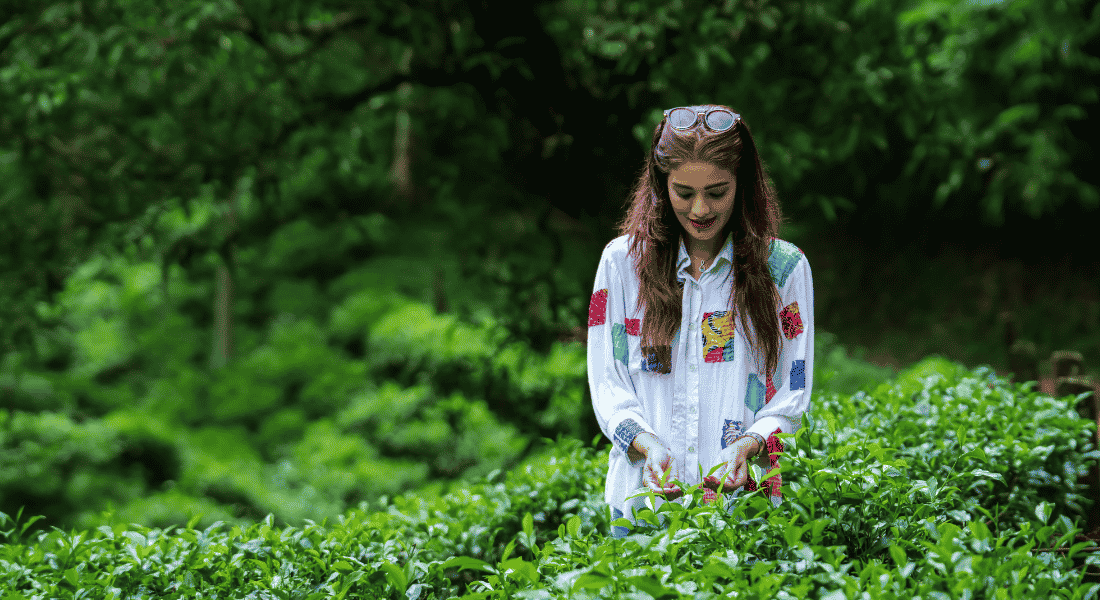
Have you ever wondered what it actually takes to fill one basket of tea leaves? Watching a skilled worker pluck leaves answers that question fast. Hands move quickly between bushes, picking only the top growth, the two leaves and a bud, while the rest of the plant stays untouched for the next round of growth.
On a guided Sylhet tea garden tour, you often get a chance to try this yourself under a worker's direction. It looks simple from a distance and feels much harder up close. Your fingers need to find the exact right point on the stem, and doing this for hours, the way workers do every day, takes real skill and stamina.
This hands-on moment turns a scenic walk into something closer to understanding. You start to see the human effort behind every cup of tea, not just the finished product on a shelf.
LOCAL INSIGHT: Ask your guide if you can speak directly with a tea worker during your visit. Many are happy to explain their daily routine, and a short conversation adds far more to your trip than a guidebook ever could.
Community Life in Tea Estates
Tea estates in Sylhet run as more than farms. Many operate as full communities, with worker housing, small schools, and basic health facilities built directly into the estate grounds, a structure that traces back to colonial-era labor arrangements still in use today.
Workers and their families often live on the same estate for generations. Children grow up watching their parents pluck leaves, and many eventually join the same workforce themselves. This continuity gives tea estates a distinct social rhythm, different from the surrounding Sylheti towns and villages.
Visiting a tea estate means walking through someone's home, not just a tourist site. Showing basic respect matters here: ask before photographing workers directly, keep noise down near housing areas, and follow your guide's lead on where visitors are welcome to walk.
This is also where rural tourism and tea tourism overlap. A respectful visit supports the local economy directly, since many estates now welcome small tour groups as an added source of income alongside tea production itself.
Sylhet Cha Bagan Cultural Experience
Cha bagan, the local term for tea garden, carries weight beyond its literal meaning in Sylhet. It represents a piece of regional identity built up over more than 150 years.
A cha bagan visit usually includes more than the tea bushes themselves. You might pass small temples or shrines built by worker communities, hear regional music tied to harvest seasons, or taste food cooked the way tea worker families have prepared it for generations.
Sylheti cuisine adds another layer here. A simple plate of Sylheti polao or a fresh cup of seven-layer tea after your garden walk rounds out the cultural side of the trip, connecting the landscape you just walked through to the food and customs built around it.
This blend of agriculture, history, and daily community life is what separates a Sylhet cha bagan experience from a standard nature tour. You're not just looking at a pretty hillside. You're stepping into a working culture that has shaped this corner of Bangladesh since the 19th century.
Things to Do in Sylhet Tea Gardens
Walk the open rows during early morning for the best light and cooler air
Watch or try the traditional plucking technique with a local worker
Photograph the colonial-era bungalows still standing on older estates
Stop at a small tea stall near the garden for a fresh, locally brewed cup
Combine your garden visit with a nearby nature stop like Lalakhal or Ratargul
Talk with tea worker families if your guide can arrange a short visit
Visit a tea factory floor if your tour includes processing demonstrations
Travel Guide to Sylhet Tea Estates
Most tea garden visits start from Sylhet city, since estates like Malnichara, Lakkatura, and Tarapur sit within a short drive. Lalakhal and the wider Srimangal cluster need a longer trip, but both fit easily into a one or two day plan.
Travel Time Table
A CNG auto-rickshaw covers the close-in estates easily. For Lalakhal or Srimangal, a reserved car or microbus makes more sense, since the roads run longer and the return trip can stretch into the evening.
Best Time to Visit Tea Gardens
Best Time to Visit Sylhet Tea Gardens (Clear Short Answer)
The best time to visit Sylhet tea gardens runs from October through March, when the weather stays dry and cool enough for comfortable walking. The plucking season runs longer, from March through November, with the heaviest harvest activity during the monsoon months of June through August, when rainfall pushes the bushes into their fastest growth.
If you want to see the most active plucking, visit during the monsoon and expect occasional rain. If you want easier walking conditions and clearer photos, visit during the cooler dry months instead.
How to Reach Sylhet Tea Gardens
Reaching Sylhet itself is straightforward. Direct flights connect Sylhet Osmani International Airport with Dhaka in under an hour, and several long-distance buses and trains run the route from Dhaka in five to seven hours.
Once you're in Sylhet city, the close-in tea gardens need only a short CNG ride. Estates further out, like Lalakhal or Srimangal, need a reserved car, a tour package, or a longer bus connection if you're heading toward Moulvibazar district.
How to Travel Around Sylhet's Tea Gardens?
Use a CNG auto-rickshaw for estates near the city, like Malnichara, Lakkatura, and Tarapur. Reserve a private car or join a guided tour for Lalakhal or Srimangal, since these sit further out and benefit from a driver who knows the route well.
Cost & Tour Packages
Tour Cost Table
Prices shift with group size, season, and how many stops you add. Weekend trips during peak tourist months usually run higher than weekday visits.
PRO TIP: Book ahead during winter weekends. Tea gardens close to the city draw heavy foot traffic once the weather turns cool and dry.
For ready-made routes, check the full Sylhet tour packages available through Otithi, or look at the Sylhet swamp and heritage tour, which pairs a tea estate stop with Ratargul and the city's heritage sites in one plan.
Sustainable Tourism & Eco Travel
Tea estates depend on healthy soil, steady rainfall, and a balanced surrounding ecosystem to keep producing year after year. Visiting responsibly helps protect that balance instead of straining it.
A few simple habits go a long way:
Stay on marked paths instead of cutting across planted rows
Carry your own water bottle and avoid leaving plastic waste on the estate
Support small local tea stalls and worker-run shops instead of bringing all your snacks from the city
Ask permission before entering worker housing areas or photographing individuals
Sylhet's tea country sits close to swamp forests, rainforests, and hill ecosystems that depend on careful land use. Supporting eco-conscious tour operators keeps this balance intact for the communities and wildlife that depend on it.
Local Food & Tea Culture Experience
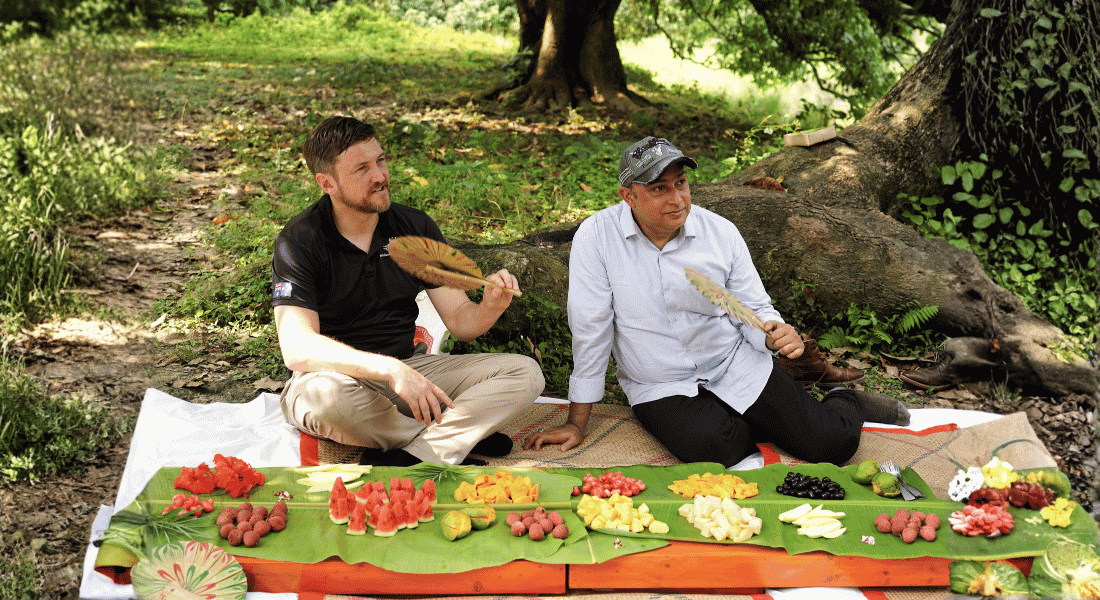
No tea garden visit feels complete without a proper cup at the end of it. Roadside tea stalls near most estates serve fresh, strong brews, often paired with simple snacks like biscuits or fried snacks sold from the same stall.
Seven-layer tea, a Sylhet specialty built from layers of differently brewed tea poured carefully into one glass, gives you a local twist worth trying at least once. Pair it with a plate of Sylheti polao or a few pithas if you visit during the cooler months, when these rice cakes show up more often at local markets.
Food here ties directly back to the tea culture around you. Workers brew their own tea throughout the day, often stronger and simpler than what gets sold to tourists, and trying that version, if a local offers it, gives you a more honest taste of daily life on the estate.
Hidden Gems Around Sylhet Tea Gardens
A few smaller stops sit close enough to tea country to add without much extra travel time.
Harong Hurong cave, a small natural cave in the remote section of Malnicherra, worth a short detour for curious visitors.
Ali Bahar Tea Garden, sitting close to Malnichara, offering a quieter, less-visited stretch of plantation hills.
Khadimnagar National Park, a forest stop near the city that pairs well with a Malnichara visit on the same day.
Small village markets near Jaintapur, useful for a quick look at daily rural life on the way to or from Lalakhal.
None of these need a dedicated day. Treat them as short add-ons to your main tea garden route.
Sample Itinerary (1–3 Days)
1-Day Plan
Morning: Malnicherra Tea Estate, garden walk and plucking demo
Midday: Local lunch near the estate or in Sylhet city
Afternoon: Lalakhal boat ride and tea garden views
Evening: Return to Sylhet city for dinner
2-Day Plan
Day 1: Malnicherra in the morning, Lakkatura or Tarapur in the afternoon, city heritage sites in the evening
Day 2: Full day at Lalakhal, including the boat ride and a relaxed walk through nearby tea hills
3-Day Plan
Day 1: Malnicherra and city tea estates
Day 2: Lalakhal river and tea garden day
Day 3: Extend toward Srimangal for the wider tea capital experience, including a tea tasting session and a short forest walk
Frequently Asked Questions
What is the best tea garden in Sylhet?
Malnicherra Tea Estate ranks as the best known tea garden in Sylhet, mainly because of its history as the oldest commercial tea garden in the entire subcontinent. It sits close to Sylhet city, making it easy to visit on a short trip. For river views paired with plantation hills, Lalakhal stands out as a strong second choice, especially for travelers who want a boat ride alongside their tea garden experience.
Can you experience tea plucking in Sylhet?
Yes, several tea garden tours let you watch or try tea plucking directly with local workers. Malnicherra is the most common spot for this, since guides there regularly arrange short demonstrations for visitors. You'll learn the exact technique workers use, picking only the top two leaves and a bud from each stem, and get a real sense of how much skill the process actually takes once you try it yourself.
How much does a Sylhet tea tour cost?
A half-day visit to a single estate like Malnicherra typically costs between 1,200 and 2,000 BDT per person, including transport and a guide. A full-day tour combining a tea estate with Lalakhal runs higher, often between 2,500 and 4,500 BDT per person, depending on group size and the season. Prices rise on weekends and during peak winter months.
What is the best time to visit tea gardens?
October through March offers the most comfortable walking weather, with dry conditions and cooler temperatures. If you want to see active plucking at its peak, plan your visit for June through August, during the monsoon, when growth speeds up and harvest activity increases across most estates.
Is Sylhet safe for tourists?
Yes, Sylhet is generally safe for tourists, including visits to tea estates, shrines, and nature sites. Basic travel precautions apply everywhere, such as keeping valuables secure, agreeing on transport prices in advance, and following your guide's directions near border-adjacent areas like Jaflong or Bisnakandi. Most tea estates near the city see regular tourist traffic without reported safety concerns.
How to reach Sylhet tea gardens?
Fly or travel by bus or train into Sylhet city first. From there, use a CNG auto-rickshaw for close-in estates like Malnicherra, Lakkatura, or Tarapur, all within a 30 minute ride. For estates further out, like Lalakhal or the wider Srimangal cluster, reserve a private car or book a guided tour that handles transport for you.
Are tea garden tours suitable for families?
Yes, most tea garden visits stay easy on the legs, with flat walking paths and short distances between viewpoints. Children often enjoy watching the plucking demonstration, and the open hills give everyone space to walk at their own pace. Bring water and sun protection, since most gardens offer limited shade across the open rows.
Do I need permission to enter a tea estate?
Some privately managed estates, including parts of Malnicherra, ask visitors to get basic permission before entering, usually arranged easily through a local guide or tour operator. Independent travelers can often walk in directly during open hours, but booking through a guided tour avoids any confusion at the gate and usually includes the permission process as part of the package.
Plan Your Sylhet Tea Garden Tour
A Sylhet tea garden tour gives you something rare: a direct line from a 19th century colonial decision to the cup of tea sitting in your hand right now. You walk rows planted generations ago, watch a plucking technique passed down through tea worker families, and taste a cha bagan culture built specifically around this hill country.
Pick your route based on what you want most. Malnichara gives you history close to the city. Lalakhal gives you river views beside the bushes. Srimangal gives you the deepest tea immersion if you have the extra day to spend.
Ready to plan your trip? Browse full Sylhet tour packages, check the Sylhet swamp and heritage tour for a tea and nature combination, or look at the Lalakhal couple retreat if river views and tea hills both top your list. You can explore every option through Otithi Tourism and lock in your dates today.
Sources
Bangladesh Tea Board, the official government body overseeing tea production standards and estate regulation across Sylhet Division.
Bangladesh Tourism Board, under the Ministry of Civil Aviation and Tourism, for destination information on Sylhet's tea estates.
UNESCO's broader documentation on intangible cultural heritage, relevant context for understanding how regional tea culture and tea-growing communities fit within wider South Asian agricultural traditions.
Note: No tea estate in Sylhet currently holds formal UNESCO World Heritage status. The cultural reference above reflects general heritage context rather than a specific designation.